The 5 biggest mispredictions in tech history


Technology has changed the world in ways our ancestors could never have imagined. From the invention of the wheel to the development of the internet, technology has proven time and time again that it has the potential to fundamentally change the way we live. But not all forecasts and predictions hit the mark. In fact, there have been some notable mispredictions in the history of technology. Sometimes these mispredictions were the result of a lack of understanding or skepticism about new technologies.

In other cases, they were simply the result of misperceptions about a particular technology’s potential. In this article, we take a look at the five biggest misjudgements in tech history. We will examine why these predictions were made, why they were wrong, and what we can learn from those mistakes. It’s a fascinating journey through the ups and downs of technological predictions and a reminder that sometimes even the brightest minds get it wrong.
The 5 biggest mispredictions in tech history
Technology has changed the world in ways our ancestors could never have imagined. From the invention of the wheel to the development of the internet, technology has proven time and time again that it has the potential to fundamentally change the way we live. But not all forecasts and predictions hit the mark. In fact, there have been some notable mispredictions in the history of technology. Sometimes these mispredictions were the result of a lack of understanding or skepticism about new technologies.
In other cases, they were simply the result of misperceptions about a particular technology’s potential. In this article, we take a look at the five biggest misjudgements in tech history. We will examine why these predictions were made, why they were wrong, and what we can learn from those mistakes. It’s a fascinating journey through the ups and downs of technological predictions and a reminder that sometimes even the brightest minds get it wrong.
No. 1 “There is maybe a market for five computers in the world…”
No. 1 “There is maybe a market for five computers in the world…”
Thomas Watson, IBM, predicted that there might be a market for five computers in the world in 1943.
The 1940s, a time when the thought of a computers in every household was as absurd as the idea that people would one day land on the moon. IBM’s then-Chairman Thomas Watson is famous for predicting that there might be a market for five computers in the world. Five. Five in all! You can picture Watson sitting in his office, gazing out at a world that has never heard of Wi-Fi, social media, or online shopping, and thinking: “Yes, five should do it.”
Perhaps he was thinking of five giant, room-filling computers used by governments and large corporations. The idea that one day we would all carry a powerful computer in our pocket was probably too far-fetched.
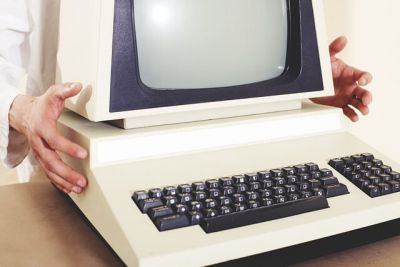
“Of course, the irony of this prediction is that IBM would later play a leading role in the personal computer revolution. Today there are billions of computers in the world and the number is constantly growing. From laptops to desktops to the computers in our smartphones, it’s clear that Watson’s prediction was a little off.”

But let’s not be too harsh on him. After all, it was a different time, and the idea that computers would one day be as ubiquitous as they are today was almost unthinkable back then. It’s a reminder that sometimes even the brightest of minds cannot accurately predict the future. And it’s also a reminder that when it comes to technology, we should always be open to the unexpected. Who knows what incredible innovations lie ahead?
Thomas Watson, IBM, predicted that there might be a market for five computers in the world in 1943.
The 1940s, a time when the thought of a computers in every household was as absurd as the idea that people would one day land on the moon. IBM’s then-Chairman Thomas Watson is famous for predicting that there might be a market for five computers in the world. Five. Five in all! You can picture Watson sitting in his office, gazing out at a world that has never heard of Wi-Fi, social media, or online shopping, and thinking: “Yes, five should do it.”
Perhaps he was thinking of five giant, room-filling computers used by governments and large corporations. The idea that one day we would all carry a powerful computer in our pocket was probably too far-fetched.
“Of course, the irony of this prediction is that IBM would later play a leading role in the personal computer revolution. Today there are billions of computers in the world and the number is constantly growing. From laptops to desktops to the computers in our smartphones, it’s clear that Watson’s prediction was a little off.”
But let’s not be too harsh on him. After all, it was a different time, and the idea that computers would one day be as ubiquitous as they are today was almost unthinkable back then. It’s a reminder that sometimes even the brightest of minds cannot accurately predict the future. And it’s also a reminder that when it comes to technology, we should always be open to the unexpected. Who knows what incredible innovations lie ahead?
No. 2 “The Internet will blow us up spectacularly in the 1990s”
No. 2 “The Internet will blow us up spectacularly in the 1990s”
Robert Metcalfe predicted that the internet would blow up in our ears in a spectacular way in the 1990s
Robert Metcalfe, the inventor of Ethernet and co-founder of 3Com, made this daring one Predicted in an article for InfoWorld magazine in 1995. He firmly believed that the Internet would “soon end in a spectacular, catastrophic collapse”. Metcalfe was so sure of his prediction that he promised to eat his words if he was wrong.
Well, as we all know, the internet has not only survived but has become an integral part of our lives. From online shopping and social media through to streaming services and Online Education, the Internet has fundamentally changed the way we work, learn and entertain ourselves.
A man a word!
Metcalfe, a man of his word, fulfilled his promise during a conference in 1999. He chopped up the article in which he made his prediction, mixed it in a blender with some liquid, and drank it in front of the audience. It was a humorous moment that underscored the importance of humility and humor in the world of technology.
Metcalfe’s prediction is a living example of how difficult it is to predict the future of technology. It also shows that even the brightest minds can sometimes be wrong. But perhaps most importantly, it reminds us not to take our predictions too seriously. Because who knows when you might be forced to eat your words… or in this case, drink!
Robert Metcalfe predicted that the internet would blow up in our ears in a spectacular way in the 1990s
Robert Metcalfe, the inventor of Ethernet and co-founder of 3Com, made this daring one Predicted in an article for InfoWorld magazine in 1995. He firmly believed that the Internet would “soon end in a spectacular, catastrophic collapse”. Metcalfe was so sure of his prediction that he promised to eat his words if he was wrong.
Well, as we all know, the internet has not only survived but has become an integral part of our lives. From online shopping and social media through to streaming services and Online Education, the Internet has fundamentally changed the way we work, learn and entertain ourselves.
A man a word!
Metcalfe, a man of his word, fulfilled his promise during a conference in 1999. He chopped up the article in which he made his prediction, mixed it in a blender with some liquid, and drank it in front of the audience. It was a humorous moment that underscored the importance of humility and humor in the world of technology.
Metcalfe’s prediction is a living example of how difficult it is to predict the future of technology. It also shows that even the brightest minds can sometimes be wrong. But perhaps most importantly, it reminds us not to take our predictions too seriously. Because who knows when you might be forced to eat your words… or in this case, drink!
No. 3 “The iPhone has no chance of gaining significant market share”
No. 3 “The iPhone has no chance of gaining significant market share”
Oh what, the iPhone has no chance of gaining significant market share?
What were we laughing about…
This unbelievable misprognosis came from Steve Ballmer, former CEO of Microsoft, in 2007
It’s always easy to be wise in hindsight, but this prediction from Steve Ballmer, Microsoft’s CEO at the time, is particularly amusing. In 2007, when the first iPhone was introduced, Ballmer was convinced it had no chance of gaining a significant market share. He argued that the lack of a keyboard and high price would make the iPhone a niche option.
As we now know, Ballmer was spectacularly wrong. The iPhone not only gained a significant market share, but also the entire Smartphone industry revolutionized. It has fundamentally changed the way we communicate, work and entertain ourselves. Today it’s almost impossible to imagine a world without smartphones, and the iPhone is at the forefront of this revolution.
Ballmer’s misjudgment shows how difficult it can be to predict the impact of a new technology. It’s also a reminder that even the most powerful tech giants sometimes get it wrong. It’s almost as if Ballmer looked into a crystal ball and saw everything upside down. This prediction is a perfect example of how the unpredictable is often the inevitable. And it’s a lesson we should all heed: Never underestimate the power of a good idea – or a shiny new gadget.
Oh what, the iPhone has no chance of gaining significant market share?
What were we laughing about…
This unbelievable misprognosis came from Steve Ballmer, former CEO of Microsoft, in 2007
It’s always easy to be wise in hindsight, but this prediction from Steve Ballmer, Microsoft’s CEO at the time, is particularly amusing. In 2007, when the first iPhone was introduced, Ballmer was convinced it had no chance of gaining a significant market share. He argued that the lack of a keyboard and high price would make the iPhone a niche option.
As we now know, Ballmer was spectacularly wrong. The iPhone not only gained a significant market share, but also the entire Smartphone industry revolutionized. It has fundamentally changed the way we communicate, work and entertain ourselves. Today it’s almost impossible to imagine a world without smartphones, and the iPhone is at the forefront of this revolution.
Ballmer’s misjudgment shows how difficult it can be to predict the impact of a new technology. It’s also a reminder that even the most powerful tech giants sometimes get it wrong. It’s almost as if Ballmer looked into a crystal ball and saw everything upside down. This prediction is a perfect example of how the unpredictable is often the inevitable. And it’s a lesson we should all heed: Never underestimate the power of a good idea – or a shiny new gadget.
No. 4 “No man would want a machine as big as a house”
No. 4 “No man would want a machine as big as a house”
Ken Olsen predicted in 1977 that no one would want a machine the size of a house.
Ken Olsen, co-founder and president of the Digital Equipment Corporation made this statement in 1977 met. It’s easy to criticize him for this miscalculation, but let’s pause for a moment and put ourselves in his shoes. It was 1977, the era of giant mainframe computers that filled entire rooms. The idea that every household could one day have its own computer seemed absurd.
“Olsen never imagined that humans would ever need personal computers. But who could blame him? Who would have thought back then that we would one day have computers that could fit in our pockets and have more processing power than spacecraft that put humans on the moon?”
Today, computers are an integral part of our everyday lives. They’re in our pockets, on our desks, and even in our refrigerators and toasters. They are so ubiquitous that we often forget they are even there. And while we can laugh at Olsen’s misjudgment, we should also be grateful. Because it is misjudgments like this that inspire innovators to make the impossible possible.
So, next time you open your laptop or type on your smartphone, think Ken Olsen and smile. Because without his misprognosis, the world might be a completely different place.
Ken Olsen predicted in 1977 that no one would want a machine the size of a house.
Ken Olsen, co-founder and president of the Digital Equipment Corporation made this statement in 1977 met. It’s easy to criticize him for this miscalculation, but let’s pause for a moment and put ourselves in his shoes. It was 1977, the era of giant mainframe computers that filled entire rooms. The idea that every household could one day have its own computer seemed absurd.
“Olsen never imagined that humans would ever need personal computers. But who could blame him? Who would have thought back then that we would one day have computers that could fit in our pockets and have more processing power than spacecraft that put humans on the moon?”
Today, computers are an integral part of our everyday lives. They’re in our pockets, on our desks, and even in our refrigerators and toasters. They are so ubiquitous that we often forget they are even there. And while we can laugh at Olsen’s misjudgment, we should also be grateful. Because it is misjudgments like this that inspire innovators to make the impossible possible.
So, next time you open your laptop or type on your smartphone, think Ken Olsen and smile. Because without his misprognosis, the world might be a completely different place.
No. 5 “The wireless music box has no conceivable commercial added value”
No. 5 “The wireless music box has no conceivable commercial added value”
David Sarnoff predicted in 1921 that the wireless jukebox (also called radio) had no conceivable commercial added value.
It’s hard to imagine a world without music available to us at the touch of a button. But in 1921, when wireless music was still in its infancy, the associates of David Sarnoff, a pioneer of American radio, were not convinced. They claimed that the “wireless jukebox” – as they called the radio – had “no conceivable commercial value creation”.
One can only imagine how they would be rolling in their graves with the rise of radio stations selling ads and the explosion of music streaming services like Spotify and Apple Music raking in billions of dollars. It’s almost as if they said, “The internet? It’s never going to happen!
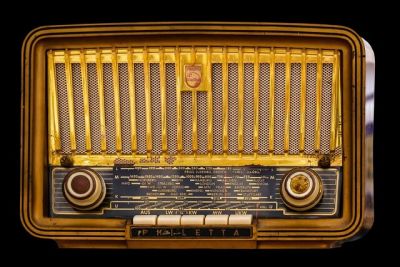
This prediction shows how difficult it is to see the potential of a new technology, especially when it is as revolutionary as radio. It’s a reminder that what seems unimaginable today could be the norm tomorrow. So, next time you’re streaming your favorite playlist on Spotify or turn on the radio to hear the latest hits, think of those poor souls who thought the wireless jukebox had no future. You couldn’t have been more wrong!
Reading tip: The 10 most valuable tech companies in the world (as of 2023)
David Sarnoff predicted in 1921 that the wireless jukebox (also called radio) had no conceivable commercial added value.
It’s hard to imagine a world without music available to us at the touch of a button. But in 1921, when wireless music was still in its infancy, the associates of David Sarnoff, a pioneer of American radio, were not convinced. They claimed that the “wireless jukebox” – as they called the radio – had “no conceivable commercial value creation”.
One can only imagine how they would be rolling in their graves with the rise of radio stations selling ads and the explosion of music streaming services like Spotify and Apple Music raking in billions of dollars. It’s almost as if they said, “The internet? It’s never going to happen!
This prediction shows how difficult it is to see the potential of a new technology, especially when it is as revolutionary as radio. It’s a reminder that what seems unimaginable today could be the norm tomorrow. So, next time you’re streaming your favorite playlist on Spotify or turn on the radio to hear the latest hits, think of those poor souls who thought the wireless jukebox had no future. You couldn’t have been more wrong!
Reading tip: The 10 most valuable tech companies in the world (as of 2023)

Popular Posts

When your own voice becomes a weapon: The rise of AI-powered audio fraud
Artificial intelligence is making the classic grandparent scam more dangerous than ever. Criminals need only a few seconds of audio material from social media to perfectly clone voices. This article examines the technology behind "deepfake calls," presents real-life case studies, and explains effective protective measures such as the family safeword.

Smartphone Wi-Fi security: Public hotspots vs. home network
Is smartphone Wi-Fi a security risk? This article analyzes in detail threats such as evil twin attacks and explains protective measures for when you're on the go. We also clarify why home Wi-Fi is usually secure and how you can effectively separate your smart home from sensitive data using a guest network.
AI labeling on social media: Obligations & help with errors
No more deception: Instagram, TikTok, and YouTube are requiring users to label AI-generated content. We explain the technology, the risks for creators, and what to do if the algorithm mistakenly identifies your real photos as AI ("false positives").
Warum dein Excel-Kurs Zeitverschwendung ist – was du wirklich lernen solltest!
Hand aufs Herz: Wann hast du zuletzt eine komplexe Excel-Formel ohne Googeln getippt? Eben. KI schreibt heute den Code für dich. Erfahre, warum klassische Excel-Trainings veraltet sind und welche 3 modernen Skills deinen Marktwert im Büro jetzt massiv steigern.

Password madness: Why passkeys are the future
The era of passwords is ending. Passkeys offer protection against phishing and make logging in as easy as glancing at your phone. But what happens when you change phones? This article explains the technology and provides important tips for securely transferring your digital keys.
Windows 10: One month after the “End of Life” – assessment and options for action
On October 14, 2025, support for Windows 10 ended. Millions of PCs are now unprotected. We examine the current security situation, the new ESU subscription model, and show solutions for older hardware – from upgrade tricks to secure Linux alternatives.
Offers 2024: Word & Excel Templates









Popular Posts
When your own voice becomes a weapon: The rise of AI-powered audio fraud
Artificial intelligence is making the classic grandparent scam more dangerous than ever. Criminals need only a few seconds of audio material from social media to perfectly clone voices. This article examines the technology behind "deepfake calls," presents real-life case studies, and explains effective protective measures such as the family safeword.
Smartphone Wi-Fi security: Public hotspots vs. home network
Is smartphone Wi-Fi a security risk? This article analyzes in detail threats such as evil twin attacks and explains protective measures for when you're on the go. We also clarify why home Wi-Fi is usually secure and how you can effectively separate your smart home from sensitive data using a guest network.
AI labeling on social media: Obligations & help with errors
No more deception: Instagram, TikTok, and YouTube are requiring users to label AI-generated content. We explain the technology, the risks for creators, and what to do if the algorithm mistakenly identifies your real photos as AI ("false positives").
Warum dein Excel-Kurs Zeitverschwendung ist – was du wirklich lernen solltest!
Hand aufs Herz: Wann hast du zuletzt eine komplexe Excel-Formel ohne Googeln getippt? Eben. KI schreibt heute den Code für dich. Erfahre, warum klassische Excel-Trainings veraltet sind und welche 3 modernen Skills deinen Marktwert im Büro jetzt massiv steigern.
Password madness: Why passkeys are the future
The era of passwords is ending. Passkeys offer protection against phishing and make logging in as easy as glancing at your phone. But what happens when you change phones? This article explains the technology and provides important tips for securely transferring your digital keys.
Windows 10: One month after the “End of Life” – assessment and options for action
On October 14, 2025, support for Windows 10 ended. Millions of PCs are now unprotected. We examine the current security situation, the new ESU subscription model, and show solutions for older hardware – from upgrade tricks to secure Linux alternatives.
Offers 2024: Word & Excel Templates