How to avoid the risks in Wi-Fi hotspots


The number of WLAN hotspots is growing at least since the abolition of the so-called “Störerhaftung” (German term) which takes the operator of the WLAN network out of liability.
However, each medal always has two sides, and so the risks should not be ignored in addition to the benefits of higher data throughput and protection of their own high-speed data volume through free Wi-Fi networks. For smartphones and tablets that are primarily logged into hotspots are sometimes more personal information than on the home PC.
In addition to contact information, pictures, documents and passwords, motion profiles can also be stored there, which make the user completely transparent. In our article we would like to point out the most important points from our point of view which can provide more security in WLAN hotspots.

How to avoid the risks in Wi-Fi hotspots
The number of WLAN hotspots is growing at least since the abolition of the so-called “Störerhaftung” (German term) which takes the operator of the WLAN network out of liability.
However, each medal always has two sides, and so the risks should not be ignored in addition to the benefits of higher data throughput and protection of their own high-speed data volume through free Wi-Fi networks. For smartphones and tablets that are primarily logged into hotspots are sometimes more personal information than on the home PC.
In addition to contact information, pictures, documents and passwords, motion profiles can also be stored there, which make the user completely transparent. In our article we would like to point out the most important points from our point of view which can provide more security in WLAN hotspots.
1. Do not leave Wi-Fi permanently enabled
1. Do not leave Wi-Fi permanently enabled
By default, devices such as smartphones or tablets are set up so that the WLAN module is permanently activated in order to be able to immediately use your own WLAN at home without switching. As soon as you are on the move, the device constantly starts to search for available Wi-Fi networks in the area and log in there.
Since the access to WLAN hotspots for the users is to be kept as simple as possible by the operators, these are often accessible without a password. If you are now in the area of a public hotspot, then your device logs in (depending on the individual configuration) in this network without you have previously confirmed this active.
However, since you are not usually alone in such a network, and also have no control over the security settings (which usually do not exist), you may open the door to people with criminal intentions.
Therefore, it is recommended to turn off the WLAN module in the smartphone when leaving the home network, and only to activate as needed. Some devices also offer the option to disable the WLAN module automatically as soon as the home network is left, and reactivated as soon as it is available again.
With this measure, you even kill two birds with one stone. Because in addition to the security aspect, the permanent WLAN network search of the device also costs valuable battery power, which, despite power-saving operating systems and built-in hardware, hardly lasts more than a day.
By default, devices such as smartphones or tablets are set up so that the WLAN module is permanently activated in order to be able to immediately use your own WLAN at home without switching. As soon as you are on the move, the device constantly starts to search for available Wi-Fi networks in the area and log in there.
Since the access to WLAN hotspots for the users is to be kept as simple as possible by the operators, these are often accessible without a password. If you are now in the area of a public hotspot, then your device logs in (depending on the individual configuration) in this network without you have previously confirmed this active.
However, since you are not usually alone in such a network, and also have no control over the security settings (which usually do not exist), you may open the door to people with criminal intentions.
Therefore, it is recommended to turn off the WLAN module in the smartphone when leaving the home network, and only to activate as needed. Some devices also offer the option to disable the WLAN module automatically as soon as the home network is left, and reactivated as soon as it is available again.
With this measure, you even kill two birds with one stone. Because in addition to the security aspect, the permanent WLAN network search of the device also costs valuable battery power, which, despite power-saving operating systems and built-in hardware, hardly lasts more than a day.
2. Use VPN for WLAN Hotspot
2. Use VPN for WLAN Hotspot
Of course, even after you have bypassed the risk of automatic and uncontrolled login to a Wi-Fi hotspot, the danger is not banned.
Let’s say you are sitting in a café with free Wi-Fi hotspot, and ask the operator or even the operator for the security standards of the network before use.
Presumably, you will be first big silence paired with an even larger question mark over the head and reap incomprehensible views.
In short, it is very common that just because the Störerhaftung for operators of WLAN hotspots was defused – to strengthen the offer of these free Internet access – they do not care about security, and also do not have the appropriate know-how.
So it’s up to you to be in a network with an unknown number of attendees and their usage patterns, and maybe even do banking or online shopping there, diligently entering your passwords. Nobody can guarantee you that the one or the other 2 tables continue to surf with the laptop now just in the net, or trying to gain access to the devices in the network.
One solution for this are the so-called VPN providers who provide a kind of tunneling solution especially for anonymous Internet access. The offer is now quite large, and offers a high level of security but it is usually not free. But you get a free trial account almost everywhere to test whether the offer is right for you.
Providers who offer completely free VPN (Virtual Private Network), and at the same time the high standards of security, there is not really, and therefore do not represent an adequate alternative. Because no one can permanently offer such a service for free and maintain their own performance.


Of course, even after you have bypassed the risk of automatic and uncontrolled login to a Wi-Fi hotspot, the danger is not banned.
Let’s say you are sitting in a café with free Wi-Fi hotspot, and ask the operator or even the operator for the security standards of the network before use.
Presumably, you will be first big silence paired with an even larger question mark over the head and reap incomprehensible views.
In short, it is very common that just because the Störerhaftung for operators of WLAN hotspots was defused – to strengthen the offer of these free Internet access – they do not care about security, and also do not have the appropriate know-how.
So it’s up to you to be in a network with an unknown number of attendees and their usage patterns, and maybe even do banking or online shopping there, diligently entering your passwords. Nobody can guarantee you that the one or the other 2 tables continue to surf with the laptop now just in the net, or trying to gain access to the devices in the network.
One solution for this are the so-called VPN providers who provide a kind of tunneling solution especially for anonymous Internet access. The offer is now quite large, and offers a high level of security but it is usually not free. But you get a free trial account almost everywhere to test whether the offer is right for you.
Providers who offer completely free VPN (Virtual Private Network), and at the same time the high standards of security, there is not really, and therefore do not represent an adequate alternative. Because no one can permanently offer such a service for free and maintain their own performance.
3. Use adequate antivirus protection
3. Use adequate antivirus protection
Of course, since a smartphone offers far more possibilities than even the simple mobile phones of the past, this also includes the possibility that viruses and Trojans spread out on the device, causing unnoticed unimaginable damage there.
It is therefore a duty to ensure adequate antivirus protection. Namely, not only the almost unlimited number of available apps pose a security risk, but also many other access routes that can come over networks on the device.
The manufacturers of anti-virus programs have meanwhile all corresponding offers as complete packages for several terminals in the program, so that in any case one will find it here. One should refrain from pure free antivirus programs, as they often do not offer the recognition rate of paid offers in tests.
Security has its price. And there you should not actually save at the wrong end, especially since complete packages for multiple devices only mean little or no extra charge.

Of course, since a smartphone offers far more possibilities than even the simple mobile phones of the past, this also includes the possibility that viruses and Trojans spread out on the device, causing unnoticed unimaginable damage there.
It is therefore a duty to ensure adequate antivirus protection. Namely, not only the almost unlimited number of available apps pose a security risk, but also many other access routes that can come over networks on the device.
The manufacturers of anti-virus programs have meanwhile all corresponding offers as complete packages for several terminals in the program, so that in any case one will find it here. One should refrain from pure free antivirus programs, as they often do not offer the recognition rate of paid offers in tests.
Security has its price. And there you should not actually save at the wrong end, especially since complete packages for multiple devices only mean little or no extra charge.
Popular Posts:

Ad-free home network: Install Pi-hole on Windows
Say goodbye to ads on smart TVs and in apps: Pi-hole software turns your Windows laptop into a network filter. This article explains step-by-step how to install it via Docker and configure the necessary DNS settings in your FRITZ!Box.
How to tune your FRITZ!Box into a professional call server
A professional telephone system can be built using a FRITZ!Box and a laptop. This article shows step by step how to use the free software "Phoner" to schedule announcements and record calls – including important legal information (§ 201 StGB).

Why to-do lists are a waste of time
Do you feel unproductive at the end of the day, even though you've worked hard? Your to-do list is to blame. It tempts you to focus on easy tasks and ignores your limited time. This article explains why lists are "self-deception" and why professionals use a calendar instead.

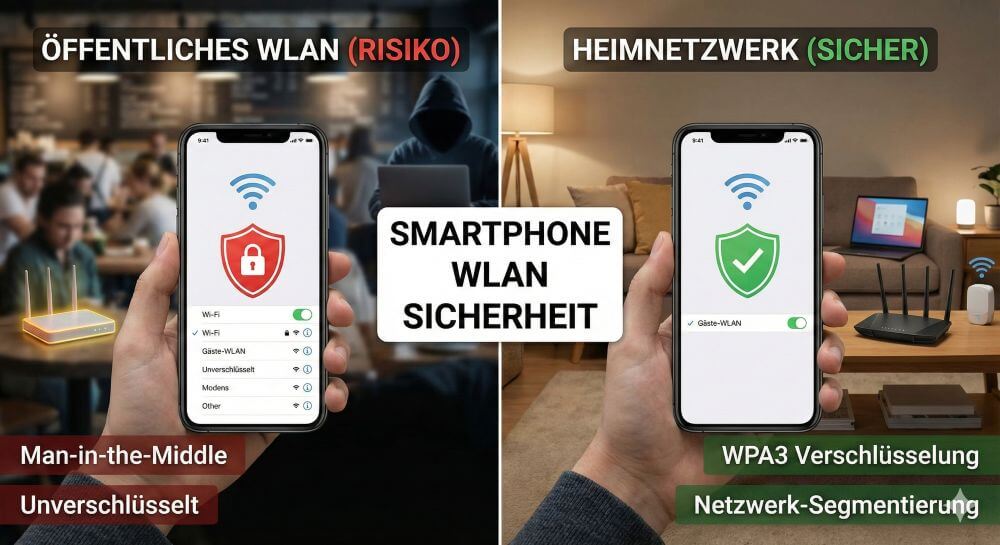
Smartphone Wi-Fi security: Public hotspots vs. home network
Is smartphone Wi-Fi a security risk? This article analyzes in detail threats such as evil twin attacks and explains protective measures for when you're on the go. We also clarify why home Wi-Fi is usually secure and how you can effectively separate your smart home from sensitive data using a guest network.

Warum dein Excel-Kurs Zeitverschwendung ist – was du wirklich lernen solltest!
Hand aufs Herz: Wann hast du zuletzt eine komplexe Excel-Formel ohne Googeln getippt? Eben. KI schreibt heute den Code für dich. Erfahre, warum klassische Excel-Trainings veraltet sind und welche 3 modernen Skills deinen Marktwert im Büro jetzt massiv steigern.

Cybersicherheit: Die 3 größten Fehler, die 90% aller Mitarbeiter machen
Hacker brauchen keine Codes, sie brauchen nur einen unaufmerksamen Mitarbeiter. Von Passwort-Recycling bis zum gefährlichen Klick: Wir zeigen die drei häufigsten Fehler im Büroalltag und geben praktische Tipps, wie Sie zur menschlichen Firewall werden.
Offers 2024: Word & Excel Templates








Popular Posts:
Ad-free home network: Install Pi-hole on Windows
Say goodbye to ads on smart TVs and in apps: Pi-hole software turns your Windows laptop into a network filter. This article explains step-by-step how to install it via Docker and configure the necessary DNS settings in your FRITZ!Box.
How to tune your FRITZ!Box into a professional call server
A professional telephone system can be built using a FRITZ!Box and a laptop. This article shows step by step how to use the free software "Phoner" to schedule announcements and record calls – including important legal information (§ 201 StGB).
Why to-do lists are a waste of time
Do you feel unproductive at the end of the day, even though you've worked hard? Your to-do list is to blame. It tempts you to focus on easy tasks and ignores your limited time. This article explains why lists are "self-deception" and why professionals use a calendar instead.
Smartphone Wi-Fi security: Public hotspots vs. home network
Is smartphone Wi-Fi a security risk? This article analyzes in detail threats such as evil twin attacks and explains protective measures for when you're on the go. We also clarify why home Wi-Fi is usually secure and how you can effectively separate your smart home from sensitive data using a guest network.
Warum dein Excel-Kurs Zeitverschwendung ist – was du wirklich lernen solltest!
Hand aufs Herz: Wann hast du zuletzt eine komplexe Excel-Formel ohne Googeln getippt? Eben. KI schreibt heute den Code für dich. Erfahre, warum klassische Excel-Trainings veraltet sind und welche 3 modernen Skills deinen Marktwert im Büro jetzt massiv steigern.
Cybersicherheit: Die 3 größten Fehler, die 90% aller Mitarbeiter machen
Hacker brauchen keine Codes, sie brauchen nur einen unaufmerksamen Mitarbeiter. Von Passwort-Recycling bis zum gefährlichen Klick: Wir zeigen die drei häufigsten Fehler im Büroalltag und geben praktische Tipps, wie Sie zur menschlichen Firewall werden.
Offers 2024: Word & Excel Templates