Google Maps gets incognito mode for more privacy


Although Google is known as well as other tech giants that they collect a huge amount of user data, which of course also explains the great success, but on the other hand, Google makes its users quite extensively possible to view the type of data collection, and also (at least in part) to limit.
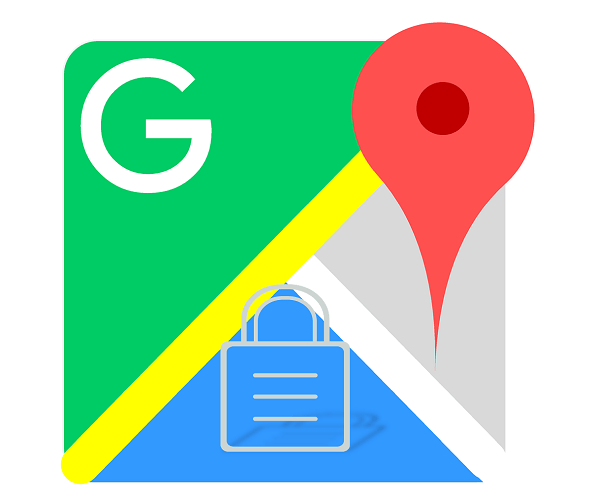
Google Maps has also been re-evaluated for privacy, and will soon offer an incognito mode.
Google Maps gets incognito mode for more privacy
Although Google is known as well as other tech giants that they collect a huge amount of user data, which of course also explains the great success, but on the other hand, Google makes its users quite extensively possible to view the type of data collection, and also (at least in part) to limit.
Google Maps has also been re-evaluated for privacy, and will soon offer an incognito mode.
Storage of searched places on Google Maps can be deactivated
After Google introduced an incognito mode for YouTube at the beginning of 2019, it is now up to the Google Maps mapping service to adapt the requirements of users to data protection and to align it here.
The incognito mode can be activated by the user in the settings menu of Google Maps. As a result, information such as searched and visited places is no longer stored and used for personalized advertising and search results. According to Google, the update comes first for Android, and will soon follow for iOS.
Also, the privacy settings for the language assistant Google Assistant should be easier, said Google. In the future, saved voice commands that were last given can be conveniently deleted. All you have to do is just say: “Ok Google, delete what I said last to you”.

Although the feature with the language assistant comes in English, it should also be available in other languages in the coming months. Also, there is a new feature for the password manager, where on the one hand checks whether the password of the user in the past has ever been used for another Google Account, and also how strong the password is.
Incidentally, you can access the password manager at https://passwords.google.com/ where you can manage all passwords stored on Android and Google Chrome.
Even if you criticize the amount of data that tech companies such as Google collect, it’s exactly this data that makes the Google services we use every day possible in this quality.
The topic of data protection is becoming more and more important to us all, because more and more data is hovering around us everywhere. Therefore, it is also commendable that those who collect this data take responsibility, and provide us with the appropriate tools to (at least partially) to keep control of it.

Storage of searched places on Google Maps can be deactivated
After Google introduced an incognito mode for YouTube at the beginning of 2019, it is now up to the Google Maps mapping service to adapt the requirements of users to data protection and to align it here.
The incognito mode can be activated by the user in the settings menu of Google Maps. As a result, information such as searched and visited places is no longer stored and used for personalized advertising and search results. According to Google, the update comes first for Android, and will soon follow for iOS.
Also, the privacy settings for the language assistant Google Assistant should be easier, said Google. In the future, saved voice commands that were last given can be conveniently deleted. All you have to do is just say: “Ok Google, delete what I said last to you”.
Although the feature with the language assistant comes in English, it should also be available in other languages in the coming months. Also, there is a new feature for the password manager, where on the one hand checks whether the password of the user in the past has ever been used for another Google Account, and also how strong the password is.
Incidentally, you can access the password manager at https://passwords.google.com/ where you can manage all passwords stored on Android and Google Chrome.
Even if you criticize the amount of data that tech companies such as Google collect, it’s exactly this data that makes the Google services we use every day possible in this quality.
The topic of data protection is becoming more and more important to us all, because more and more data is hovering around us everywhere. Therefore, it is also commendable that those who collect this data take responsibility, and provide us with the appropriate tools to (at least partially) to keep control of it.
Popular Posts:

Dynamic ranges in Excel: OFFSET function
The OFFSET function in Excel creates a flexible reference. Instead of fixing =SUM(B5:B7), the function finds the range itself, e.g., for the "last 3 months". Ideal for dynamic charts or dashboards that grow automatically.
Mastering the INDIRECT function in Excel
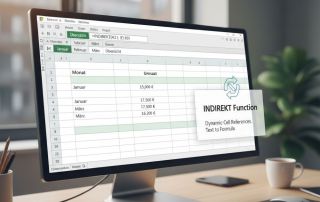
The INDIRECT function in Excel converts text into a real reference. Instead of manually typing =January!E10, use =INDIRECT(A2 & "!E10"), where A2 contains 'January'. This allows you to easily create dynamic summaries for multiple worksheets.

From assistant to agent: Microsoft’s Copilot
Copilot is growing up: Microsoft's AI is no longer an assistant, but a proactive agent. With "Vision," it sees your Windows desktop; in M365, it analyzes data as a "Researcher"; and in GitHub, it autonomously corrects code. The biggest update yet.

Windows 12: Where is it? The current status in October 2025
Everyone was waiting for Windows 12 in October 2025, but it didn't arrive. Instead, Microsoft is focusing on Windows 11 25H2 and "Copilot+ PC" features. We'll explain: Is Windows 12 canceled, postponed, or is it already available as an AI update for Windows 11?

Blocking websites on Windows using the hosts file
Want to block unwanted websites in Windows? You can do it without extra software using the hosts file. We'll show you how to edit the file as an administrator and redirect domains like example.de to 127.0.0.1. This will block them immediately in all browsers.
The “Zero Inbox” method with Outlook: How to permanently get your mailbox under control.
Caught red-handed? Your Outlook inbox has 1000+ emails? That's pure stress. Stop the email deluge with the "Zero Inbox" method. We'll show you how to clean up your inbox and regain control using Quick Steps and rules.
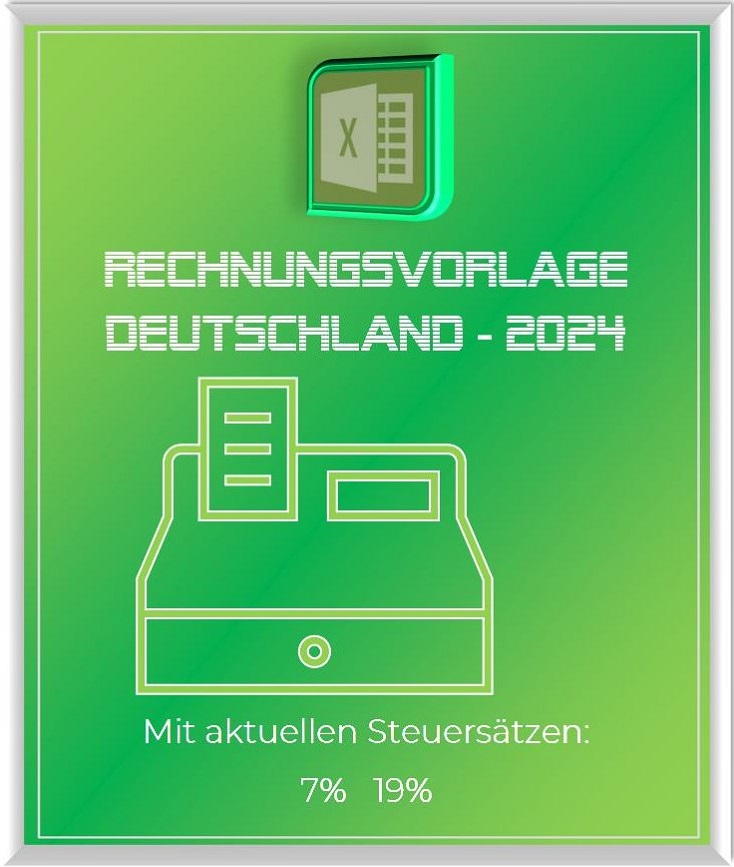
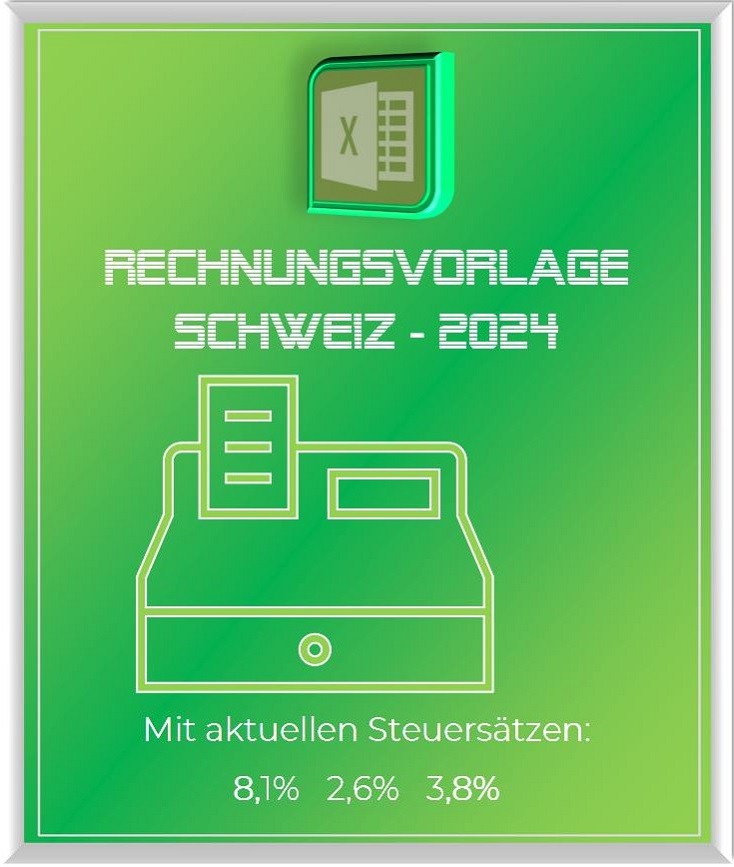
Offers 2024: Word & Excel Templates






Popular Posts:
Dynamic ranges in Excel: OFFSET function
The OFFSET function in Excel creates a flexible reference. Instead of fixing =SUM(B5:B7), the function finds the range itself, e.g., for the "last 3 months". Ideal for dynamic charts or dashboards that grow automatically.
Mastering the INDIRECT function in Excel
The INDIRECT function in Excel converts text into a real reference. Instead of manually typing =January!E10, use =INDIRECT(A2 & "!E10"), where A2 contains 'January'. This allows you to easily create dynamic summaries for multiple worksheets.
From assistant to agent: Microsoft’s Copilot
Copilot is growing up: Microsoft's AI is no longer an assistant, but a proactive agent. With "Vision," it sees your Windows desktop; in M365, it analyzes data as a "Researcher"; and in GitHub, it autonomously corrects code. The biggest update yet.
Windows 12: Where is it? The current status in October 2025
Everyone was waiting for Windows 12 in October 2025, but it didn't arrive. Instead, Microsoft is focusing on Windows 11 25H2 and "Copilot+ PC" features. We'll explain: Is Windows 12 canceled, postponed, or is it already available as an AI update for Windows 11?
Blocking websites on Windows using the hosts file
Want to block unwanted websites in Windows? You can do it without extra software using the hosts file. We'll show you how to edit the file as an administrator and redirect domains like example.de to 127.0.0.1. This will block them immediately in all browsers.
The “Zero Inbox” method with Outlook: How to permanently get your mailbox under control.
Caught red-handed? Your Outlook inbox has 1000+ emails? That's pure stress. Stop the email deluge with the "Zero Inbox" method. We'll show you how to clean up your inbox and regain control using Quick Steps and rules.
Offers 2024: Word & Excel Templates