The AI revolution in the workplace: Which jobs are at risk in the future?


Few topics shape the discussion about our future as much as artificial intelligence. Tools like ChatGPT and Microsoft 365 Copilot have gone from niche phenomena to everyday tools in a very short time. However, along with this fascination comes concern: Which jobs will AI make obsolete? Will robots and algorithms soon take over our jobs?
These questions are valid. But a panicky “we’ll all be replaced” rhetoric is too simplistic. Instead, a more nuanced look at which tasks and skills can be automated by AI—and which professions could fundamentally change or even disappear as a result—is worthwhile.

The basic principle: Why some tasks are more susceptible than others
To understand which jobs are at risk, we need to understand what the current generation of AI excels at. It’s less about entire professions and more about specific tasks that exhibit the following characteristics:
- High repetitiveness: Tasks that follow a clear, recurring pattern.
- Data-driven decision-making: Tasks that rely on analyzing large amounts of data and recognizing patterns.
- Standardized creation: Generating text, code, images, or reports according to predefined rules and templates.
- Information synthesis: Gathering, summarizing, and processing information from various sources.
Conversely, tasks requiring complex human skills are safe: strategic and critical thinking in unpredictable situations, deep emotional understanding (empathy), complex physical dexterity, and genuine creativity that goes beyond simply recombinating existing elements.
Specific professional fields undergoing change: Where the risk is highest
Based on the above principle, several professional fields can be identified that are subject to high pressure to transform due to AI.
Less replacement, more change: The future as a “centaur”
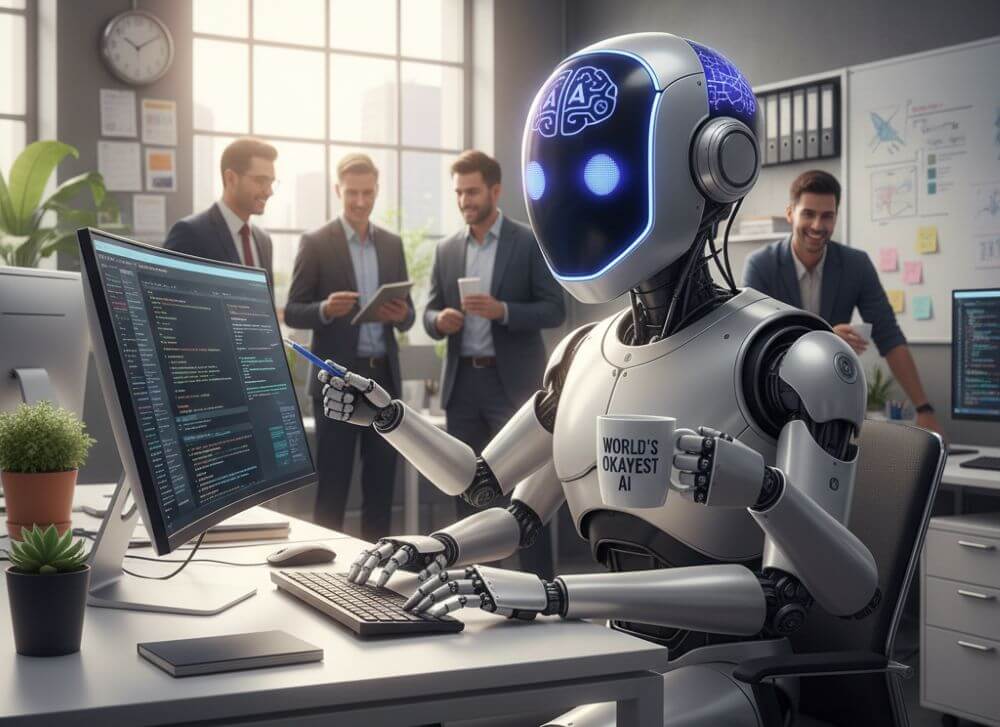
The most important insight is: Most professions will not disappear completely. Instead, they will change. The model of the future is the “Centaur”—a symbiosis of humans and AI, in which both leverage their strengths.
- Lawyers no longer spend days researching files, but instead use AI to find relevant precedents in minutes, allowing them to focus on strategic argumentation.
- Doctors no longer make diagnoses alone, but use AI that compares MRI images with millions of similar cases, freeing up more time for patient consultations.
- Marketing managers no longer write texts themselves, but give AI precise instructions and refine the best drafts with their brand and target audience knowledge.
The core competency of the future is no longer the execution of routine tasks, but the ability to ask the right questions, critically evaluate the AI’s results, and use them strategically.
Conclusion: Don’t panic, adapt – What you can do now
The AI revolution is not a tsunami that will overwhelm us unprepared. It is a massive wave that we must learn to surf. Instead of fearing job loss, we should seize the opportunity for professional development. The crucial skills for the future are:
- Critical thinking and problem-solving: The ability to question AI results and solve complex, new problems.
- Emotional intelligence: Empathy, communication, and teamwork – all areas in which humans will be superior to AI for the foreseeable future.
- Creativity and strategic thinking: The development of truly new ideas and long-term plans.
- Digital competence and AI management: The confident use of AI tools and the ability to control them effectively (“prompt engineering”).
The workplace of the future does not belong to AI alone. It belongs to those who learn to dance with it. The time to learn the dance steps is now.

Beliebte Beiträge

Create a Word letter template with form fields
Create a professional DIN 5008 letter template with form fields and drop-down lists in Microsoft Word, and write letters as easily as you would fill out a form.

Protect Word documents from editing
Protect your documents in Microsoft Word from unauthorized editing or block access completely.

Show and remove duplicate entries in Excel | Tutorial
We explain how to remove duplicate entries from Excel. And also how you can only display duplicate entries in Excel but not delete them immediately in order to decide on a case-by-case basis.

Custom Formatting Excel – Number Format Codes Excel
We use a practical example to explain the importance and possible uses of custom formatting in Excel. Number format codes in Excel are not rocket science!
How to create a dynamic table in Excel
This is how you conveniently create a dynamic table in Excel and have it automatically carry out calculations.

Use macros correctly in Excel
Almost everyone has heard of the term "macro" in the context of Excel, and perhaps has shied away from it because it sounds like a rather complicated affair for which you have to deal with Excel programming.
Offers 2024: Word & Excel Templates