Why AI chatbots are so often wrong:
A look behind the scenes of artificial intelligence


They are the new superstars of the digital world: AI chatbots like ChatGPT, Gemini, and others. They can write poems, program code, summarize complex topics, and answer almost any question. But despite all the initial enthusiasm, disillusionment quickly sets in when one realizes that the answers are surprisingly often incorrect, misleading, or even completely fabricated.
But why is this? If these models were trained with the knowledge of the entire internet, shouldn’t they know everything? The answer lies in the fundamental workings of this technology and the data it is fed.
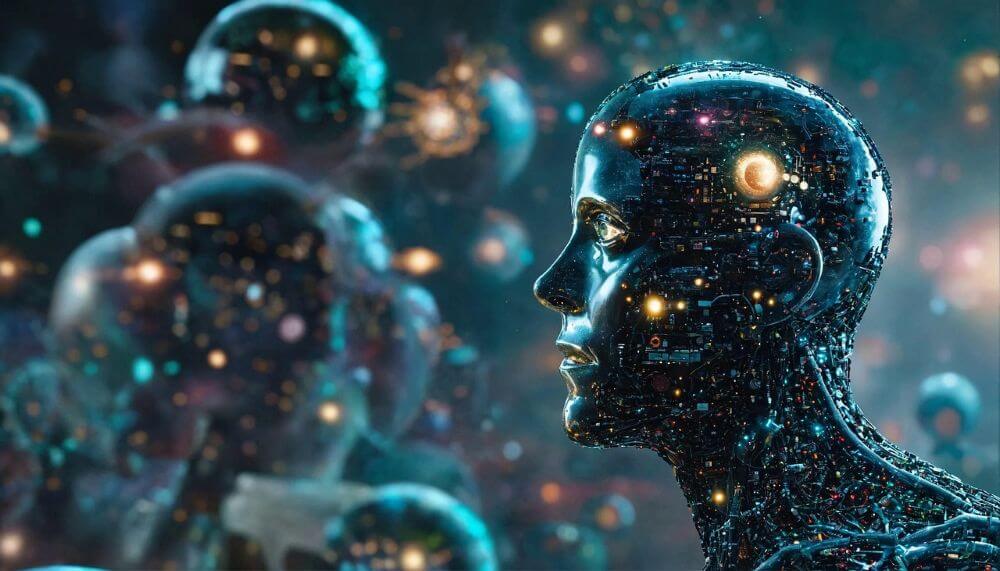
1. The core problem: AI doesn’t “think,” it calculates.
Perhaps the biggest misconception about AI chatbots is the assumption that they understand the world, know facts, or possess consciousness. They don’t.
At their core, so-called Large Language Models (LLMs) are gigantic statistical tools. They have been trained on vast amounts of text from the internet and have learned to recognize patterns in language. When you ask a question, the AI doesn’t “think” about the answer. Instead, it calculates which word is statistically most likely to follow your input and the words it has generated so far.
Example: If you ask “The capital of France is…”, the AI has seen the sentence “The capital of France is Paris” trillions of times in its training data. The probability that “Paris” will be the next word is extremely high.
The problem: The system is optimized to generate a fluent, plausible, and grammatically correct answer—not necessarily a true answer. If a false piece of information sounds plausible and has occurred often enough in the training data, the AI will confidently reproduce it.
2. The phenomenon of “hallucinations”
This statistical approach leads directly to the most well-known problem with AI chatbots: so-called “hallucinations.” This refers to the fabrication of facts, sources, quotes, or events that sound convincing but lack any basis.
If the AI cannot find an exact answer in its data patterns or has gaps in its knowledge, it simply fills them with the most probable word combinations. It then invents:
- Sources: It lists scientific studies or articles that never existed.
- Quotes: It attributes words to historical figures that they never uttered.
- Facts: It invents details about events or biographies.
The insidious thing about this is that the AI presents these fabrications with the same authority and confident tone as correct facts. She almost never signals that she is unsure or that she is only offering advice.
3. “Garbage in, garbage out”: The limitations of training data
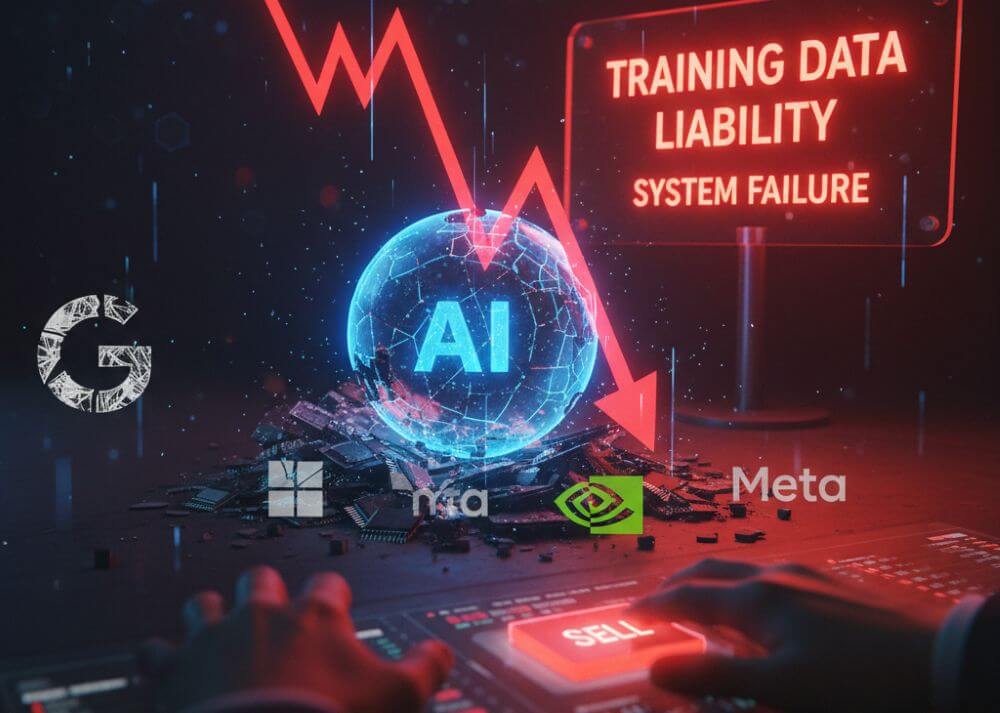
An AI model is only ever as good as the data it was trained on. However, the internet is not a repository of pure, verified facts. It is full of opinions, biases, outdated information, and deliberate misinformation.
Outdated Knowledge: Most large models have a “knowledge stop”—a date up to which their training data extends. If you ask them about events that occurred after that date, they either can’t answer or (worse) they try to guess and hallucinate.
Bias: AI learns from texts written by humans—including all our implicit and explicit biases. If certain groups are over- or underrepresented in the training data, or are subject to stereotypes, the AI adopts these patterns.
Faulty data: If a piece of misinformation is repeated often enough on the internet (e.g., a popular conspiracy theory or a historical myth), the AI learns this pattern as “likely” and presents it as fact.
4. Lack of context and world understanding
A human understands the context of a question. We understand irony, subtext, and the physical world around us. An AI doesn’t. It only processes text.
If an input is ambiguous, the AI can easily misunderstand the intended context. It lacks genuine “world knowledge” or common sense to assess whether a generated answer is even logically or physically possible. It can tell you how to boil an egg, but it doesn’t “know” what an egg is, what heat is, or why you need water.
Conclusion: AI is a powerful tool, not an oracle.
AI chatbots are impressive tools for creativity, summarizing, and pattern recognition. However, they are not infallible knowledge bases. Their errors are not “accidents” but inherent to the system. They stem from their statistical nature, their lack of genuine understanding, and the unavoidable flaws in their training data.
For users, this means one thing above all: Be wary of blind trust. Every answer from an AI chatbot, especially when it comes to facts, figures, medical advice, or historical data, must be critically examined and verified against reliable sources.

Beliebte Beiträge

Use bookmarks and cross-references in Word
How to use text markers to make your Word document dynamic and click through your pages.
Create flyers and business cards with Word
To create professional flyers and business cards in Word 2016/2019 without any additional image editing program.

Microsoft Office gets fresher with a new design
The familiar appearance of Microsoft Office versions will soon be a thing of the past, and a sleek design gives it a fresh look.
Autocompletion and Autocorrection in Word
What is not suitable, is made suitable. How to Customize Auto Completion & Auto-Correction to Your Needs

The absolute, relative and mixed references in Excel
This is how you correctly use relative and absolute references in Excel and save yourself a lot of work

How to create professional Excel invoice templates
How to create professional invoice templates in Excel 2016/2019 for small businesses, with tax ID, logo and everything that goes with it.
Offers 2024: Word & Excel Templates