Warning: The “Black Friday” trap in the office mailbox


November is here, and with it comes the growing flood of offers, discount codes, and “exclusive deals.” Black Friday and Cyber Monday are just around the corner, transforming our email inboxes into a digital marketplace. While consumers hope for the best bargains, cybercriminals are seizing their biggest opportunity of the year. The office email inbox is particularly vulnerable.
The temptation to quickly check an offer, even during working hours, is strong. But this is precisely where a sophisticated trap lurks, one that can endanger not only individual employees but the entire company.

Why the office mailbox is the perfect target
You might think that personal shopping emails have no place in the office. The reality is quite different. Cybercriminals know exactly why they focus their attacks on company email addresses:
The blurring of lines between personal and professional: Many employees use their work email for personal purposes or at least check personal emails on company devices. The boundaries are becoming increasingly indistinct.
The “trustworthiness filter”: Emails that make it through the company’s spam filter are often given more trust. “If it arrives here, it must be safe.” – a fatal misconception.
High distractions, high time pressure: The Black Friday season is characterized by “Only 2 hours left!” and “While supplies last!” This artificial scarcity lowers inhibitions and leads to quick, impulsive clicks. In the stressful daily work routine, such a click hardly goes unnoticed.
High distractions, high time pressure: The Black Friday season is characterized by “Only 2 hours left!” and “While supplies last!”. This artificial scarcity lowers inhibitions and tempts people to click quickly and without thinking. In the stressful workday, such a click is hardly noticed.
High distractions, high time pressure: The ultimate goal: While the target for private accounts is often “only” credit card data, a compromised business account is a digital master key. Criminals can access internal data, customer lists, financial information, or the entire network.
The Anatomy of the Black Friday Trap
The attacks are rarely clumsy. They are psychologically clever and exploit users’ expectations. The most common scams:
The “Exclusive Offer” Phishing Email
- The bait: An email that looks like it comes from a major retailer (Amazon, MediaMarkt, Zalando) or a well-known brand. It promises an incredible discount (e.g., “iPhone for 50% off”) that is only available via the included link.
- The trap: The link leads to a fake login page that is deceptively similar to the original. Anyone who enters their login details here hands them directly over to the scammers.
The “Problem with your order” email
- The bait: During the shopping season, many people are expecting packages. An email with the subject line “Delivery failed” or “Payment problem with your order” immediately creates a sense of urgency.
- The trap: The email prompts the user to open an attached file (supposedly an invoice or address label) or to click a “confirmation” link.
- The result: The file is malware. This could be a Trojan that steals data, or—in the worst-case scenario—ransomware that encrypts the entire company network and demands a large ransom.
The “invoice” scam
The bait: A simple email, seemingly from a supplier’s accounting department, with the subject line “Outstanding invoice Black Friday Sale” or “Reminder.”
The trap: The attachment is a supposed .zip file, a Word document, or a PDF. Opening the program silently installs malware that logs keystrokes (passwords!) or takes over the computer.
“`
How to spot fraud attempts: The checklist for your mailbox
No filter is perfect. The last and most important line of defense is the human element. Train your skepticism with this checklist:
The Sender (The Most Important Check!):
- Look at the exact email address, not just the display name. Scammers often use typosquatting (e.g., service@amazn.de instead of @amazon.de) or cryptic addresses (e.g., info@mail-123-xzy.com).
The Salutation:
- “Dear Customer” or “Hello EmailAddress@company.de” are major red flags. Reputable companies where you have an account know your name.
Urgency and Emotions:
- Are you being pressured? Is your account threatened with suspension? Are you being promised an unbelievable prize? These are classic social engineering tactics designed to trick you into clicking without thinking. Stop. Breathe. Think.
The Mouse-Over Test (No Clicking!):
- Hover your mouse cursor over the link or button in the email. Wait a moment. The actual link destination will appear in the bottom corner of your browser or email program.
- Does this link lead to a strange domain (e.g., www.login-amazon.biz instead of www.amazon.de)? Do not click!
Spelling and Design:
- Pixelous logos, poor grammar, or strange umlauts (e.g., “fuer” instead of “für” in the wrong places) are often signs of a hastily translated phishing email.
Attachments:
- Ask yourself: Are you expecting this attachment? Never open unsolicited .zip, .exe, .html, or .js files. Be extremely cautious with Word or Excel files that ask you to “enable macros.”
The consequences: When the trap snaps shut
A single click on the wrong link at the office can trigger a catastrophe that extends far beyond the user’s own computer:
For the company:
- Data theft: Trade secrets, customer data, or financial information are stolen.
- GDPR violations: The theft of customer data can lead to massive fines and severe reputational damage.
- Business interruption: A ransomware attack can cripple the entire production or administration. Recovery costs thousands and takes days.
- Financial loss: Fraudsters can impersonate the CEO (“CEO fraud”) and initiate transfers to their accounts.
For the employee:
- Identity theft: When private passwords (often used for multiple services) are compromised.
- Disciplinary consequences: Causing a serious security incident through negligence can have consequences under labor law.
Conclusion: How to navigate safely through the “deal storm”
The Black Friday season doesn’t have to be an ordeal, but it does require the highest level of digital hygiene – especially in the workplace.
For employees:
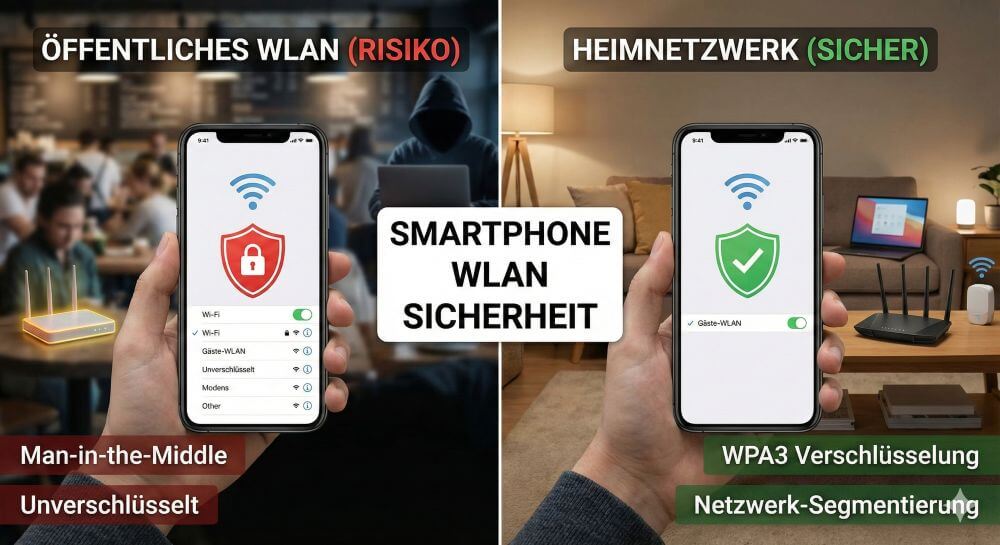
- Strict separation: Use only private email addresses and private devices for personal online shopping (e.g., your smartphone on mobile data, not company Wi-Fi).
- Healthy skepticism: Treat any email promising a deal or addressing a problem as potentially dangerous.
- When in doubt: Delete or report: If an email raises even the slightest suspicion – don’t click on anything. Instead, forward suspicious emails to your IT department or security officer (if there is one) and then delete them.
For companies:
-
- R
- aise awareness: Launch an awareness campaign now. Send your employees this article or similar warnings.
- Technical defenses: Ensure that spam filters, virus scanners, and endpoint protection are up to date.
- Clear guidelines: Communicate clearly the rules for private internet use at work.
Don’t let the hunt for the best deal turn into an expensive nightmare for your company.

Beliebte Beiträge

The best tips for Microsoft Word
Sparen Sie mit diesen Tipps für Microsoft Word viel Zeit und Nerven. Arbeiten Sie effektiver mit der beliebtesten Textverarbeitungssoftware.
Why is my Excel File so big?
Solve the problem with Excel spreadsheets that take up several megabytes of space without any apparent reason.

The most important tips for Excel
These 10 tips for Microsoft Excel 2016/2019 with questions that many users ask every day are guaranteed to help you and save a lot of time.

More fonts in Word through Google Fonts
You can find out how to expand the font selection in Word with just a few steps and above all free in our article.
Move pages and insert new ones in word
You probably also know the situation that you are sitting on a very long document, and in the middle of it falls on the actually between page 2 and page 3 still a page in between must.
The Sreference and the Wreference in Excel
Microsoft Excel: How to get S-reference and W-reference purposefully data out of a source.
Offers 2024: Word & Excel Templates