IT skills for non-IT professionals: Your unfair advantage in the office


There are those meetings where the IT department takes over. Suddenly, terms like “API,” “backend,” “deployment,” or “cloud migration” are flying around the room. You nod politely, mentally checking out, hoping no one asks you a direct question.
This used to be okay. After all, you were responsible for marketing, sales, or HR, not tech.
Today, things are different. In the modern workplace, there are hardly any “non-IT jobs” left. Every office job is digital. Those who only passively use technology (“I click here because that’s how I was shown”) quickly fall behind. But those who understand it and use it to their advantage gain a massive competitive edge—an “unfair advantage.”
The good news: You don’t have to learn to code to be tech-savvy. It’s enough to master the right concepts and tools. Here are the four most important IT skills for non-IT professionals in 2025.

No-Code & Low-Code: Programming without a programming language
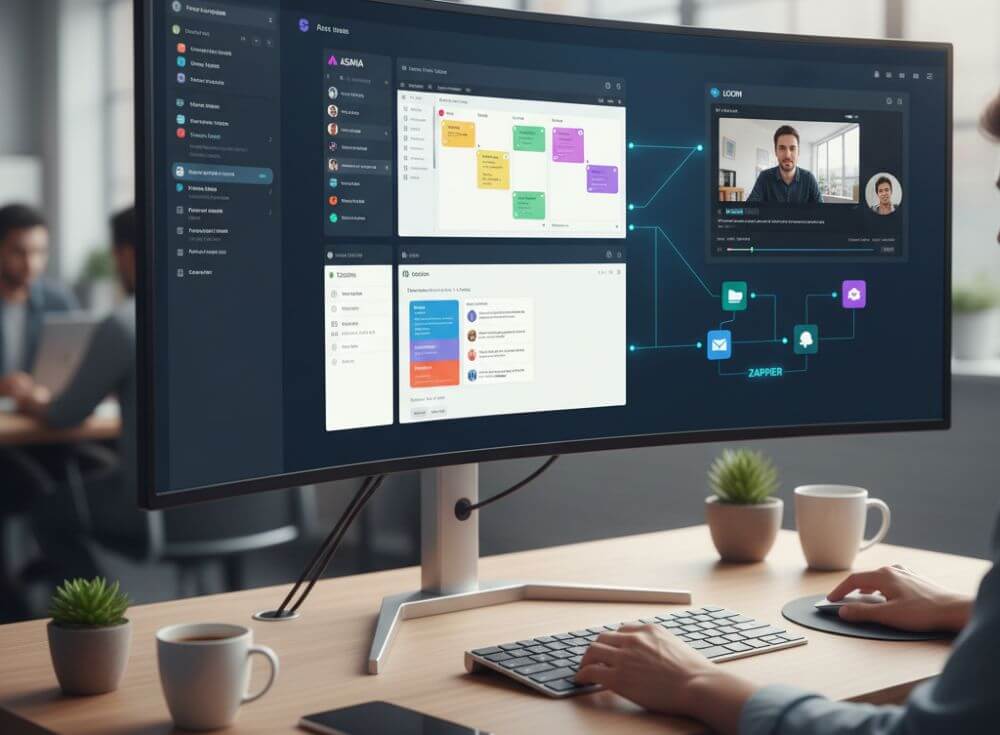
This is arguably the biggest lever for your personal efficiency. “No-code” tools allow you to build digital workflows by visually connecting building blocks instead of typing code.
The problem: You manually save invoice attachments from emails to a specific OneDrive folder every day. Annoying and time-consuming.
The IT solution (for non-IT people): You use a tool like Microsoft Power Automate (often included in your Office license) or Zapier. You create a simple rule: “IF an email with the subject ‘Invoice’ arrives, THEN save the attachment to folder X.”
Your advantage: You automate tedious routine tasks yourself, without having to wait for the overloaded IT department.
Data Literacy: Not just reading data, but understanding it
We’re drowning in data, but we’re thirsting for insights. “Data literacy” doesn’t mean you have to build complex statistical models. It means you’re not afraid of a large Excel spreadsheet and you ask the right questions.
What you need to be able to do:
- Understand where data comes from (Is it reliable?).
- Perform basic analyses (Pivot tables are your best friend here).
- Recognize when a graph is manipulated or misleading.
Why it’s important: Decisions are increasingly data-driven. If you can back up your proposals with solid data, you’ll have the upper hand in every meeting.
Cyber Security Awareness: Don’t be the security vulnerability
This might sound dry, but it’s vital for your career. A single wrong click on a well-crafted phishing email can cripple the entire company network. “I’m not a techie” is no longer an excuse.
What you need to know:
- How do I recognize modern phishing (e.g., fake emails from the “boss” that put pressure on me)?
- Why “password123” is also taboo for personal use (use password managers).
- What happens if I connect to public Wi-Fi in a café?
Your advantage: You’ll become a reliable asset to the company, not a liability.
Understanding “Tech-Speak”: The Interpretive Skill
You don’t need to know how to program an API (interface). But you do need to know what it does: It allows two different software programs to communicate with each other.
Understanding the basic concepts will help you communicate more effectively with IT colleagues or external service providers. You’ll be able to formulate requirements more clearly and better understand why some things take time or are technically challenging. This makes you the ideal project manager for digital projects—a highly sought-after role.
Conclusion: Curiosity beats prior knowledge
No one expects you to rewire the server room. But the modern workplace expects you to be comfortable with technology.
The key to IT skills for non-IT professionals is simple curiosity. The next time you encounter a technical problem, don’t immediately click away. Ask yourself: “How does this actually work, roughly?” This small shift in mindset is the first step from being a mere user to a digital creator.

Beliebte Beiträge

Use bookmarks and cross-references in Word
How to use text markers to make your Word document dynamic and click through your pages.
Create flyers and business cards with Word
To create professional flyers and business cards in Word 2016/2019 without any additional image editing program.

Microsoft Office gets fresher with a new design
The familiar appearance of Microsoft Office versions will soon be a thing of the past, and a sleek design gives it a fresh look.

Autocompletion and Autocorrection in Word
What is not suitable, is made suitable. How to Customize Auto Completion & Auto-Correction to Your Needs
The absolute, relative and mixed references in Excel
This is how you correctly use relative and absolute references in Excel and save yourself a lot of work
How to create professional Excel invoice templates
How to create professional invoice templates in Excel 2016/2019 for small businesses, with tax ID, logo and everything that goes with it.
Offers 2024: Word & Excel Templates