EU plans to expand chat control


The EU Commission, supported by European governments, is working quietly to lift digital mail secrecy. As part of the fight against child abuse, a regulation is to be passed that will require communication service providers to screen communication content for signs of child abuse or attempts by adults to attract children (so-called “grooming”). But that’s not all, the draft law should now also include the monitoring of audio communication!

User devices can be searched for images or content of potential child abuse should such an order be issued. This so-called client-side scanning (CSS) checks before a message is sent whether it contains a depiction of child abuse. Client-side scanning undermines the privacy of letters, which is protected by end-to-end encryption is guaranteed for communication services, since data is searched through before encryption without concrete suspicion. Apple had planned a similar process, despite opposition from recognized IT security researchers. In a study, they came to the conclusion that client-side scanning represents a threat to privacy, IT security, freedom of expression and overall democracy.
What is planned?
What is planned?
According to a survey by the Swedish Presidency, which was answered by 20 EU member states, many EU states want to expand the controversial plans for so-called chat control. Ten countries spoke out clearly in favor of monitoring audio communications in order to combat child sexual abuse. On the other hand, six countries, including Germany, expressed concerns and are more inclined to oppose this proposal. Seven Member States have not yet taken a position on this issue.
Controlling and monitoring these communication channels, also known as “chat control“, also presents a significant challenge. While text messages can be scanned for inappropriate or illegal content with relative ease, the Monitoring audio content is technically much more difficult, and error-prone.

Mass surveillance by order
Mass surveillance by order
Per Disclosure Order should enable authorities to oblige online services to automatically check the content of their users systematically and impartially. For such an arrangement, there must be a “significant risk” that, for example, depictions of abuse are disseminated via the service. Critics fear that this term could potentially apply to any service through which users share content.
The German Lawyers’ Association (DAV) shares this view and believes that the provisions are “extremely vague and also so low-threshold that they can basically be applied to all hosting and communication services, especially social networks would be.“
The DAV also notes that the associated obligation to evaluate communication content on a large scale would be incompatible with fundamental freedom rights, would represent a particularly serious encroachment on the confidentiality of communication and, in addition, all users of e-mail, chat and hosting services under general suspicion. There is a risk of significant “chilling effects“, i.e. self-censorship by EU citizens . In addition, interference with the relationship of trust with persons subject to professional secrecy such as lawyers, doctors and journalists could be feared.
This planned mass evaluation of communication content would also contradict the case law of the European Court of Justice (ECJ) in relation to data retention. The court has repeatedly declared excessively broad storage requirements to be unlawful.
The ECJ assessed the handling of traffic and location data. An inappropriate and mass evaluation of content, as envisaged in the current Commission draft, would go “far beyond the previously discussed measures of the data retention“, according to the statement of the DAV. The chances of the law surviving litigation would be correspondingly poor.

Popular Posts:

Dynamic ranges in Excel: OFFSET function
The OFFSET function in Excel creates a flexible reference. Instead of fixing =SUM(B5:B7), the function finds the range itself, e.g., for the "last 3 months". Ideal for dynamic charts or dashboards that grow automatically.
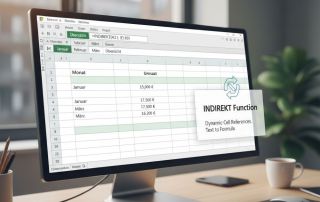
Mastering the INDIRECT function in Excel
The INDIRECT function in Excel converts text into a real reference. Instead of manually typing =January!E10, use =INDIRECT(A2 & "!E10"), where A2 contains 'January'. This allows you to easily create dynamic summaries for multiple worksheets.

From assistant to agent: Microsoft’s Copilot
Copilot is growing up: Microsoft's AI is no longer an assistant, but a proactive agent. With "Vision," it sees your Windows desktop; in M365, it analyzes data as a "Researcher"; and in GitHub, it autonomously corrects code. The biggest update yet.

Windows 12: Where is it? The current status in October 2025
Everyone was waiting for Windows 12 in October 2025, but it didn't arrive. Instead, Microsoft is focusing on Windows 11 25H2 and "Copilot+ PC" features. We'll explain: Is Windows 12 canceled, postponed, or is it already available as an AI update for Windows 11?

Blocking websites on Windows using the hosts file
Want to block unwanted websites in Windows? You can do it without extra software using the hosts file. We'll show you how to edit the file as an administrator and redirect domains like example.de to 127.0.0.1. This will block them immediately in all browsers.

The “Zero Inbox” method with Outlook: How to permanently get your mailbox under control.
Caught red-handed? Your Outlook inbox has 1000+ emails? That's pure stress. Stop the email deluge with the "Zero Inbox" method. We'll show you how to clean up your inbox and regain control using Quick Steps and rules.
Offers 2024: Word & Excel Templates









Popular Posts:
Dynamic ranges in Excel: OFFSET function
The OFFSET function in Excel creates a flexible reference. Instead of fixing =SUM(B5:B7), the function finds the range itself, e.g., for the "last 3 months". Ideal for dynamic charts or dashboards that grow automatically.
Mastering the INDIRECT function in Excel
The INDIRECT function in Excel converts text into a real reference. Instead of manually typing =January!E10, use =INDIRECT(A2 & "!E10"), where A2 contains 'January'. This allows you to easily create dynamic summaries for multiple worksheets.
From assistant to agent: Microsoft’s Copilot
Copilot is growing up: Microsoft's AI is no longer an assistant, but a proactive agent. With "Vision," it sees your Windows desktop; in M365, it analyzes data as a "Researcher"; and in GitHub, it autonomously corrects code. The biggest update yet.
Windows 12: Where is it? The current status in October 2025
Everyone was waiting for Windows 12 in October 2025, but it didn't arrive. Instead, Microsoft is focusing on Windows 11 25H2 and "Copilot+ PC" features. We'll explain: Is Windows 12 canceled, postponed, or is it already available as an AI update for Windows 11?
Blocking websites on Windows using the hosts file
Want to block unwanted websites in Windows? You can do it without extra software using the hosts file. We'll show you how to edit the file as an administrator and redirect domains like example.de to 127.0.0.1. This will block them immediately in all browsers.
The “Zero Inbox” method with Outlook: How to permanently get your mailbox under control.
Caught red-handed? Your Outlook inbox has 1000+ emails? That's pure stress. Stop the email deluge with the "Zero Inbox" method. We'll show you how to clean up your inbox and regain control using Quick Steps and rules.
Offers 2024: Word & Excel Templates