Why personal branding will determine your next IT promotion


In the IT world, a myth often prevails: “My code speaks for me.” Good code, clean architectures, and technical expertise are undoubtedly the foundation. But in a globalized, remote-work-driven industry where recruiters scan hundreds of profiles on LinkedIn and GitHub daily, this foundation is merely the entry ticket.
Anyone who truly wants to advance in IT today, lead exciting projects, or climb to the next senior level needs more than just skills. They need a digital twin: a clear, professional, and visible personal brand.
This article is your roadmap. We’ll explain why “digital professionalism” is the new must-have for IT careers and how to build your personal brand without becoming a loudmouth.

Why “just good code” won’t be enough by 2025
The days when developers sat unseen in basements churning out code are over. Modern IT is collaborative, agile, and increasingly global. Here are the hard facts about why your digital presence (co-)determines your career:
The Transparent Developer: Before you’re even invited to your first interview, a recruiter or potential manager has Googled you. They see your LinkedIn profile, your GitHub repository, and maybe even your answers on Stack Overflow. What they find there is the first impression—and it counts.
Remote Work & Global Competition: Your colleague might be in another country, your boss on another continent. Your digital communication encompasses all your professional interactions. Anyone who appears unclear, unreliable, or unprofessional here loses trust and influence.
From Executor to Strategist: The leap from “Developer” to “Senior Developer,” “Lead,” or “Architect” isn’t just a technical leap. It’s a leap toward greater responsibility, communication, and influence. Suddenly, you’re not just writing code anymore, but also defending concepts, leading teams, and mentoring others. Your personal brand demonstrates that you’re ready for this.
Personal branding isn’t about vanity. It’s the strategic management of your public image. Digital professionalism is the practical application of this strategy in emails, pull requests, and on social media platforms.
The 4 pillars of your digital IT identity
Your personal brand doesn’t happen overnight. It’s built on four key platforms. Important: You don’t have to be a master of all of them, but you should know how they work and which ones are important for your goals.
1. LinkedIn: Your Digital Headquarters
LinkedIn is your professional showcase. Most IT professionals make the same mistake here: They use it like a dusty resume that only gets updated every two years.
A no-go: A profile without a picture, a slogan like “Looking for new opportunities,” and a list of technologies without context.
Pro Move (Digital Professionalism):
- Headline: Be specific. Instead of “Software Developer,” use “Senior Java Developer | Specialist in Scalable Microservices & Cloud-Native Architectures (AWS).”
- About Text (Summary): Tell a story. What’s your “why”? What problem do you enjoy solving most? (e.g., “I help teams migrate complex monoliths to maintainable, high-performance cloud systems.”)
- Activity: Don’t just announce that you’re looking for a job. Comment on relevant technical articles, share a lesson learned from your last project, or congratulate a colleague on a success.
2. GitHub: The Transparent Portfolio
- For developers, GitHub (or GitLab/Bitbucket) is often more important than a resume. Recruiters look here not only at whether you have code, but also at how you work.
- Avoidance: Dozens of unfinished “tutorial projects” without descriptions. A blank profile picture. No activity outside of work hours (if you’re using it for job hunting).
Pro-Move (Digital Professionalism):
- Pinned Repositories: Highlight 2-3 of your best projects.
- The README.md is your business card: Every project needs a clear README. What does it do? How do you install it? What technologies were used? A screenshot or GIF works wonders.
- Open Source: You don’t have to build the next React. But a few meaningful contributions (even bug fixes or documentation improvements) to well-known projects demonstrate teamwork and initiative.
3. Professional Platforms (Stack Overflow, Dev.to, Medium)
Here you showcase your expertise and problem-solving skills.
- Stack Overflow: A high reputation on Stack Overflow is a strong signal. It shows that you can solve complex problems and—more importantly—explain them to others.
- Blogging (Medium/Dev.to/Your Own Blog): Nothing signals “seniority” as strongly as the ability to impart knowledge. Write about a problem you’ve solved. Explain a complex concept simply. This positions you as a thought leader in your niche.
4. Twitter (X) & Co: The Network
Twitter is the living room of the industry in many IT bubbles (e.g., JavaScript, AI, Security). Here you can interact directly with the creators of your favorite tools.
No-go: Getting involved in “flame wars,” constantly complaining about your job, or sharing unprofessional content linked to your public profile.
Pro-Move (Digital Professionalism):
- Follow the leading figures in your industry.
- Ask intelligent questions.
- Participate constructively in discussions.
From Coder to IT Brand in 5 Steps
You’re convinced, but don’t know where to start? Here’s your action plan.
Step 1: The Audit (Google Yourself)
- What do you find when you Google your name in incognito mode? Do you see your LinkedIn profile? Your GitHub? Or 10-year-old party photos? That’s your status quo.
Step 2: Define Your Niche (Your “What”)
- You can’t be an expert in everything. What do you want to be known for?
- Bad: “I know Java and Python.”
- Good: “I’m the go-to expert for performance optimization in Python-based data pipelines.”
- Good: “My strength lies in modernizing legacy systems with a focus on DevOps culture.”
Step 3: Digital Cleanup Ensure consistency.
- Use the same high-quality photo and a consistent headline or bio that reflects your niche from Step 2 across all professional platforms (LinkedIn, GitHub, Twitter).
Step 4: Deliver Value Instead of Self-Promotion (The 80/20 Principle)
- Your personal brand isn’t built by asking for jobs, but by providing value.
- 80% Value: Share your knowledge. Write a short post about a new tool. Answer a question on Stack Overflow. Create a helpful Gist on GitHub.
- 20% “Question”: “I’m looking for a new challenge in the area of X,” “Does anyone have experience with Y?”.
Step 5: Professionalism in Everyday Life (The “Soft Skills” of IT)
Digital professionalism is evident in the small things:
- Pull Requests: Write clear descriptions. Conduct constructive, empathetic code reviews (avoid “That’s wrong,” use “What do you think about us…”).
- Slack/Teams: Communicate asynchronously and in a friendly manner. Don’t just say “Hello,” but “Hello [Name], I have a question about [Project X]: [Your question].”
- Emails: Clear subject lines, short sentences, professional signature.
Conclusion: Your digital twin works for you
Personal branding in IT isn’t an optional add-on for extroverts. It’s a core competency for anyone who wants to actively shape their career.
Your code demonstrates your skills. Your personal brand and digital professionalism reveal who you are, how you work, and where you’re headed.
Right now, as you read this article, a recruiter might be looking for exactly your skillset. The question is: Will your digital twin convince them that you’re the best candidate for the lead role—even before they’ve spoken to you?

Beliebte Beiträge

Warum dein Excel-Kurs Zeitverschwendung ist – was du wirklich lernen solltest!
Hand aufs Herz: Wann hast du zuletzt eine komplexe Excel-Formel ohne Googeln getippt? Eben. KI schreibt heute den Code für dich. Erfahre, warum klassische Excel-Trainings veraltet sind und welche 3 modernen Skills deinen Marktwert im Büro jetzt massiv steigern.
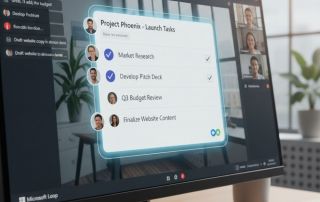
Microsoft Loop in Teams: The revolution of your notes?
What exactly are these Loop components in Microsoft Teams? We'll show you how these "living mini-documents" can accelerate your teamwork. From dynamic agendas to shared, real-time checklists – discover practical use cases for your everyday work.

Career booster 2026: These Microsoft Office skills will take you further!
A new year, new career opportunities! But which Office skills will really be in demand in 2026? "Skilled use" is no longer enough. We'll show you today's must-haves – like advanced Excel, using AI in the office, and relevant certifications for your resume.
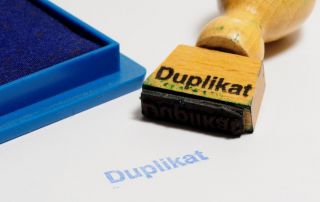
Excel Tutorial: How to quickly and safely remove duplicates
Duplicate entries in your Excel lists? This distorts your data. Our tutorial shows you, using a practical example, how to clean up your data in seconds with the "Remove Duplicates" function – whether you want to delete identical rows or just values in a column.

Dynamic ranges in Excel: OFFSET function
The OFFSET function in Excel creates a flexible reference. Instead of fixing =SUM(B5:B7), the function finds the range itself, e.g., for the "last 3 months". Ideal for dynamic charts or dashboards that grow automatically.
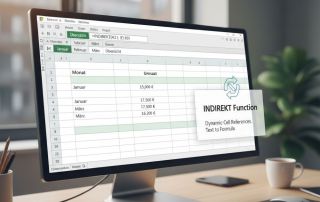
Mastering the INDIRECT function in Excel
The INDIRECT function in Excel converts text into a real reference. Instead of manually typing =January!E10, use =INDIRECT(A2 & "!E10"), where A2 contains 'January'. This allows you to easily create dynamic summaries for multiple worksheets.
Offers 2024: Word & Excel Templates