The AI revolution in the workplace: Which jobs are at risk in the future?


Few topics shape the discussion about our future as much as artificial intelligence. Tools like ChatGPT and Microsoft 365 Copilot have gone from niche phenomena to everyday tools in a very short time. However, along with this fascination comes concern: Which jobs will AI make obsolete? Will robots and algorithms soon take over our jobs?
These questions are valid. But a panicky “we’ll all be replaced” rhetoric is too simplistic. Instead, a more nuanced look at which tasks and skills can be automated by AI—and which professions could fundamentally change or even disappear as a result—is worthwhile.

The basic principle: Why some tasks are more susceptible than others
To understand which jobs are at risk, we need to understand what the current generation of AI excels at. It’s less about entire professions and more about specific tasks that exhibit the following characteristics:
- High repetitiveness: Tasks that follow a clear, recurring pattern.
- Data-driven decision-making: Tasks that rely on analyzing large amounts of data and recognizing patterns.
- Standardized creation: Generating text, code, images, or reports according to predefined rules and templates.
- Information synthesis: Gathering, summarizing, and processing information from various sources.
Conversely, tasks requiring complex human skills are safe: strategic and critical thinking in unpredictable situations, deep emotional understanding (empathy), complex physical dexterity, and genuine creativity that goes beyond simply recombinating existing elements.
Specific professional fields undergoing change: Where the risk is highest
Based on the above principle, several professional fields can be identified that are subject to high pressure to transform due to AI.
Less replacement, more change: The future as a “centaur”
The most important insight is: Most professions will not disappear completely. Instead, they will change. The model of the future is the “Centaur”—a symbiosis of humans and AI, in which both leverage their strengths.
- Lawyers no longer spend days researching files, but instead use AI to find relevant precedents in minutes, allowing them to focus on strategic argumentation.
- Doctors no longer make diagnoses alone, but use AI that compares MRI images with millions of similar cases, freeing up more time for patient consultations.
- Marketing managers no longer write texts themselves, but give AI precise instructions and refine the best drafts with their brand and target audience knowledge.
The core competency of the future is no longer the execution of routine tasks, but the ability to ask the right questions, critically evaluate the AI’s results, and use them strategically.
Conclusion: Don’t panic, adapt – What you can do now
The AI revolution is not a tsunami that will overwhelm us unprepared. It is a massive wave that we must learn to surf. Instead of fearing job loss, we should seize the opportunity for professional development. The crucial skills for the future are:
- Critical thinking and problem-solving: The ability to question AI results and solve complex, new problems.
- Emotional intelligence: Empathy, communication, and teamwork – all areas in which humans will be superior to AI for the foreseeable future.
- Creativity and strategic thinking: The development of truly new ideas and long-term plans.
- Digital competence and AI management: The confident use of AI tools and the ability to control them effectively (“prompt engineering”).
The workplace of the future does not belong to AI alone. It belongs to those who learn to dance with it. The time to learn the dance steps is now.

Beliebte Beiträge
Warum dein Excel-Kurs Zeitverschwendung ist – was du wirklich lernen solltest!
Hand aufs Herz: Wann hast du zuletzt eine komplexe Excel-Formel ohne Googeln getippt? Eben. KI schreibt heute den Code für dich. Erfahre, warum klassische Excel-Trainings veraltet sind und welche 3 modernen Skills deinen Marktwert im Büro jetzt massiv steigern.
Microsoft Loop in Teams: The revolution of your notes?
What exactly are these Loop components in Microsoft Teams? We'll show you how these "living mini-documents" can accelerate your teamwork. From dynamic agendas to shared, real-time checklists – discover practical use cases for your everyday work.
Career booster 2026: These Microsoft Office skills will take you further!
A new year, new career opportunities! But which Office skills will really be in demand in 2026? "Skilled use" is no longer enough. We'll show you today's must-haves – like advanced Excel, using AI in the office, and relevant certifications for your resume.
Excel Tutorial: How to quickly and safely remove duplicates
Duplicate entries in your Excel lists? This distorts your data. Our tutorial shows you, using a practical example, how to clean up your data in seconds with the "Remove Duplicates" function – whether you want to delete identical rows or just values in a column.
Dynamic ranges in Excel: OFFSET function
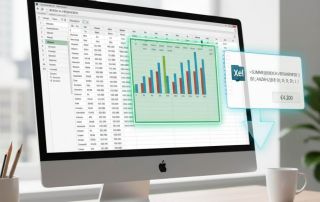
The OFFSET function in Excel creates a flexible reference. Instead of fixing =SUM(B5:B7), the function finds the range itself, e.g., for the "last 3 months". Ideal for dynamic charts or dashboards that grow automatically.
Mastering the INDIRECT function in Excel
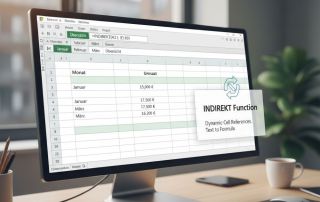
The INDIRECT function in Excel converts text into a real reference. Instead of manually typing =January!E10, use =INDIRECT(A2 & "!E10"), where A2 contains 'January'. This allows you to easily create dynamic summaries for multiple worksheets.
Offers 2024: Word & Excel Templates