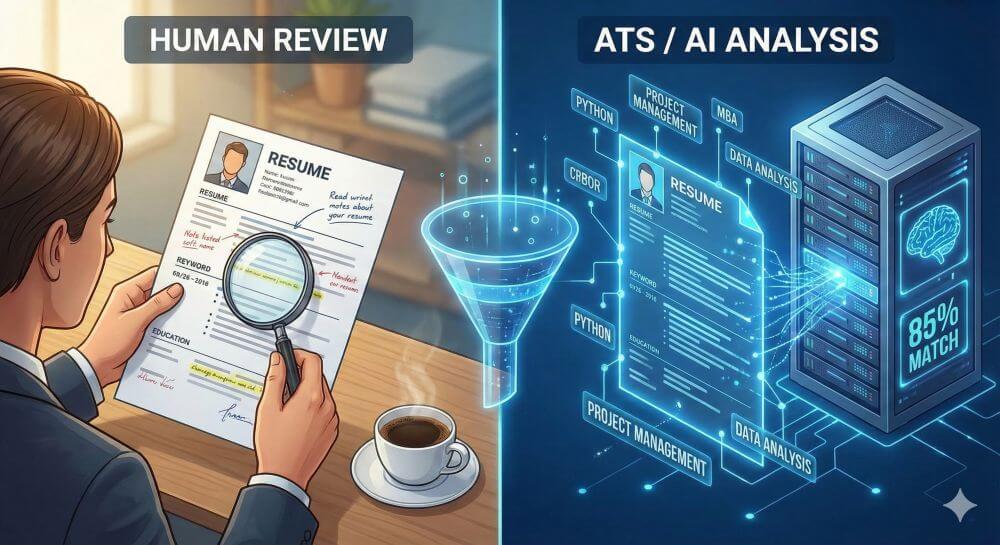
Career killers: These 7 sentences you should never say to your boss


Have you ever said something at the office and regretted it the second it left your mouth? We’ve all been there. While minor slip-ups are often forgiven, certain phrases can instantly undermine your professionalism and permanently damage your career.
Words have power—especially in conversations with superiors. Often, it’s not the intention that matters, but how the message is received. Here are the seven most dangerous phrases in professional life and how to phrase them better.

These 7 sentences you should never say to your boss
1. “That’s not in my job description.”
This sentence is the quickest way to be labeled as inflexible and uncommitted. Managers are looking for problem solvers, not for people who just follow the rules. Even if the task is genuinely new, this sentence sounds like resistance.
A better approach is to say:
“I’d be happy to take that on. Since this will shift the priorities of my current projects, could we briefly discuss what I should postpone to make room for it?”
2. “That’s how we’ve always done it.”
Innovation is the driving force of every company. This phrase signals stagnation, fear of change, and a lack of creativity. It makes you seem stuck in the past.
It’s better to say:
- “That’s an interesting approach. Let’s see how we can integrate that with our existing processes to achieve the best possible outcome.”
3. “I’ll try.”
“Try” implies the possibility of failure. It sounds uncertain and noncommittal. When push comes to shove, managers want reliability, not vague attempts. As Yoda said, “Do or do not. There is no try.”
It’s better to say:
-
-
- I’ll take care of it and get back to you with an update by [time].
-
4. “That’s not my fault.”
Nobody likes being blamed. Even if it’s true, this statement comes across as defensive and childish. In professional life, it’s not about blame, but about solutions. Anyone who immediately deflects responsibility doesn’t appear to be a team player.
It’s better to say:
- “Let’s analyze what went wrong so we can make sure it doesn’t happen again.”
5. “I can’t work with [colleague X].”
This statement makes you—not your colleague—seem difficult. It shows that you can’t professionally resolve personal differences. Supervisors expect you to get along with different personalities without having to act as a mediator.
It’s better to say:
- “I feel that our working styles are clashing on this project. I would like to suggest separating the areas of responsibility more clearly in order to be more efficient.”
6. “I don’t have time.” / “I’m too busy.”
Why this is a mistake: Everyone is busy. This statement often sounds like poor time management or simply disinterest. If you brush off your boss, you might be blocking your next promotion.
A better way to say:
- “I’d love to help, but my calendar is currently full with [Project A]. Should I prioritize this new topic?”
7. “I assume that’s impossible.”
Pessimism is contagious—and undesirable. If you immediately dismiss an idea without examining it, you come across as a blocker. Managers appreciate employees who look for ways to make the impossible possible (or at least find a good alternative).
It’s better to say:
- “That will be a challenge under the current circumstances. Let me look into what resources we would need to make it happen.”
Conclusion: Diplomacy is the key to advancement
It’s not about agreeing with everything or exploiting yourself. It’s about framing. The way you set boundaries, address problems, or give feedback determines whether you’re perceived as a solution-oriented professional or a complainer.
Pay close attention to your word choice next week—small changes can have a big impact on your reputation within the company.

Beliebte Beiträge

Import Stock Quotes into Excel – Tutorial
Importing stock quotes into Excel is not that difficult. And you can do a lot with it. We show you how to do it directly without Office 365.

Create Excel Budget Book – with Statistics – Tutorial
Create your own Excel budget book with a graphical dashboard, statistics, trends and data cut-off. A lot is possible with pivot tables and pivot charts.
Excel random number generator – With Analysis function
You can create random numbers in Excel using a function. But there are more possibilities with the analysis function in Excel.
Excel Database with Input Form and Search Function
So erstellen Sie eine Datenbank mit Eingabemaske und Suchfunktion OHNE VBA KENNTNISSE in Excel ganz einfach. Durch eine gut versteckte Funktion in Excel geht es recht einfach.

Enable developer tools in Office 365
Unlock developer tools in Excel, Word and Outlook. Expand the possibilities with additional functions in Office 365.
Dictate text in Word and have it typed
Dictating text in Word is much easier and faster than typing everything on the keyboard. Speech recognition in Word works just like external speech recognition software.
Offers 2024: Word & Excel Templates