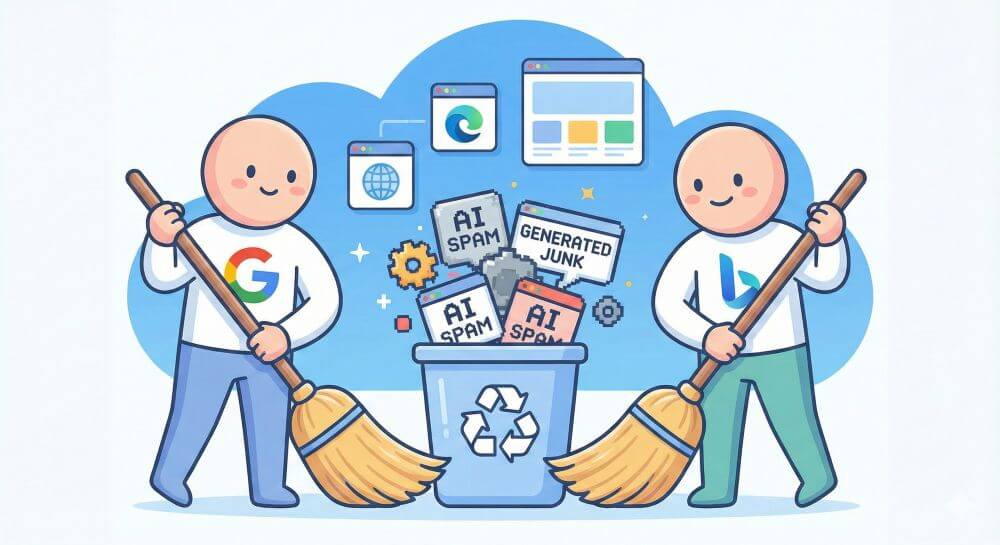
Pinterest and the fight against AI spam


Anyone who’s opened Pinterest in recent months to search for a summer dress pattern, DIY shelf instructions, or tattoo inspiration knows the feeling: something’s not quite right. The lighting in the photo is too perfect, the shelf is at a physically impossible angle, or the tattoo has one line too many.
Pinterest, once the last bastion of hand-curated, human creativity on the internet, is at a crucial turning point. The platform is battling a wave of AI-generated spam that threatens to undermine the app’s fundamental promise: doability.

When inspiration becomes illusion
The core problem isn’t the existence of artificial intelligence itself, but how it’s weaponized by spammers. Tools like Midjourney or DALL-E can generate thousands of visually stunning images in seconds.
This leads to two massive problems on Pinterest:
- The “dead end” content: A user clicks on a picture of a beautiful cake, only to land on an ad-ridden website that doesn’t offer a recipe—because the cake was never baked.
- The impossibility of implementation: This is particularly fatal in the DIY and crafts sector. An AI-generated image of a crocheted sweater looks fantastic, but is often technically impossible to replicate because the stitch structure makes no logical sense.
The result: Users lose trust. Pinterest transforms from a search engine for projects into a gallery of fantasies.
Why Pinterest is particularly vulnerable
Unlike Instagram or TikTok, where personality and parasocial relationships take center stage, Pinterest is a visual search engine. Users are looking for a solution or an idea, not a person.
This makes the platform a perfect target for SEO spammers. Automated bots flood feeds with AI-generated images optimized for popular search terms (“Modern Living Room Beige,” “Fantasy Character Art”) to drive traffic to external sites.
Pinterest’s counter-offensive
Pinterest is aware of the problem and has responded in recent years. From today’s perspective, three main strategies can be identified:
Algorithmic Adjustments: Pinterest tries to prioritize signals that indicate “real experiences.” This often means favoring video content or Pins linked to verified merchant websites.
Technology Against Technology: The company itself uses advanced AI to detect patterns in spam networks and flag mass-produced content faster than human moderators ever could.
Focus on “Creators”: To maintain authenticity, Pinterest pushes formats that are harder to fake, such as step-by-step videos or content from verified influencers.
The Irony: Pinterest Loves AI (Actually)
It would be wrong to say that Pinterest is against AI. On the contrary, the platform is a pioneer in computer vision. Features like “Shop Similar Looks” and “Body Type Technology” (which adapts search results to different body shapes and skin tones) are based on massive AI power.
The battle, therefore, isn’t against the technology itself, but against the loss of authenticity. Pinterest wants to use AI to deliver better results, not to generate more results.
5 tips for creators: How to beat the AI
Prove feasibility (Proof of Concept): AI generates the perfect end result, but often fails along the way. Your biggest advantage is the process.
- Tip: Use carousel pins or videos that show “intermediate steps.” A half-knitted sweater or a cake in the oven is the ultimate proof that the project is real.
Personality as a differentiating factor: AI accounts are mostly faceless. Users are now actively searching for the person behind the idea.
- Tip: Show your face or hands in the image. Use text overlays with a personal message (“My mistake on the first attempt was…”). This builds the parasocial bond that a bot cannot replicate.
Video beats image: While AI-generated images are almost perfect, AI-generated videos often still have minor flaws (glitchy movements, physics errors). Real video footage is considered more trustworthy by the algorithm.
- Tip: Upload native videos (not watermarked TikTok reposts) that show a real story.
Link to verified sources: The biggest frustration for users is “dead links” in AI spam.
- Tip: Make sure your website/domain is verified (the small globe icon with a checkmark). Write explicitly in the pin description: “Full recipe/instructions on my blog.” This signals: There’s more to this than just a pretty picture.
Use “anti-perfectionism”: AI-generated images are often too symmetrical, too perfectly lit, and too smooth.
- Tip: A “messy kitchen” photo or a realistic living room with a crease in the carpet now looks more appealing than sterile perfection because it seems “attainable.”
Conclusion: A return to curation?
Pinterest’s future will depend on whether its algorithm can learn to distinguish between a beautiful image and a useful one.
We’re currently seeing a trend back toward human curation. Users are beginning to follow accounts they trust, rather than relying solely on the algorithmic feed. If Pinterest wants to win this battle, it needs to prove that there are real people behind the pixels, using real needles, brushes, and cooking spoons.

Beliebte Beiträge

Warum dein Excel-Kurs Zeitverschwendung ist – was du wirklich lernen solltest!
Hand aufs Herz: Wann hast du zuletzt eine komplexe Excel-Formel ohne Googeln getippt? Eben. KI schreibt heute den Code für dich. Erfahre, warum klassische Excel-Trainings veraltet sind und welche 3 modernen Skills deinen Marktwert im Büro jetzt massiv steigern.

Microsoft Loop in Teams: The revolution of your notes?
What exactly are these Loop components in Microsoft Teams? We'll show you how these "living mini-documents" can accelerate your teamwork. From dynamic agendas to shared, real-time checklists – discover practical use cases for your everyday work.

Career booster 2026: These Microsoft Office skills will take you further!
A new year, new career opportunities! But which Office skills will really be in demand in 2026? "Skilled use" is no longer enough. We'll show you today's must-haves – like advanced Excel, using AI in the office, and relevant certifications for your resume.
Excel Tutorial: How to quickly and safely remove duplicates
Duplicate entries in your Excel lists? This distorts your data. Our tutorial shows you, using a practical example, how to clean up your data in seconds with the "Remove Duplicates" function – whether you want to delete identical rows or just values in a column.

Dynamic ranges in Excel: OFFSET function
The OFFSET function in Excel creates a flexible reference. Instead of fixing =SUM(B5:B7), the function finds the range itself, e.g., for the "last 3 months". Ideal for dynamic charts or dashboards that grow automatically.
Mastering the INDIRECT function in Excel
The INDIRECT function in Excel converts text into a real reference. Instead of manually typing =January!E10, use =INDIRECT(A2 & "!E10"), where A2 contains 'January'. This allows you to easily create dynamic summaries for multiple worksheets.
Offers 2024: Word & Excel Templates