How to tune your FRITZ!Box into a professional call server
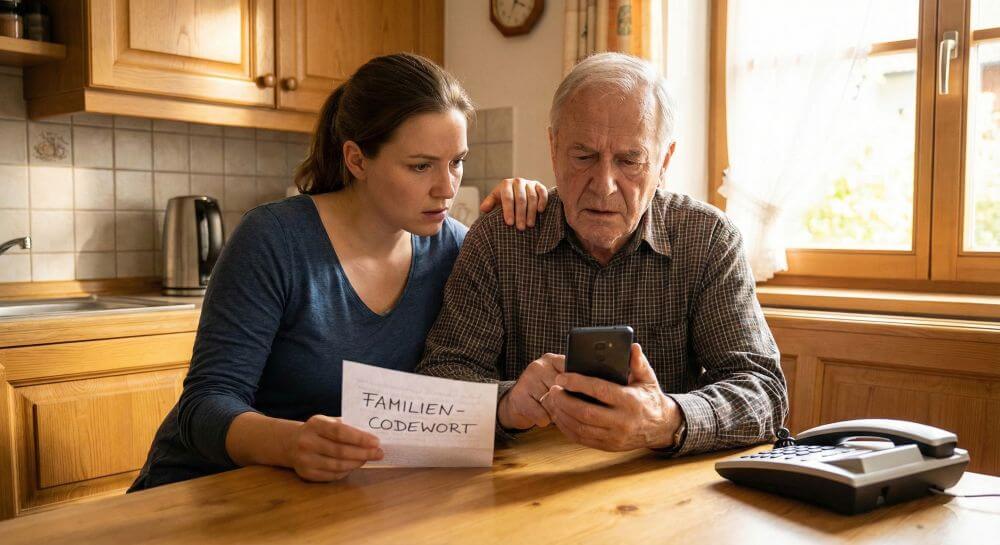
Anyone who works from home or runs a small business knows the problem: The standard features of the FRITZ!Box are great, but sometimes the integrated answering machine just isn’t enough. Do you want to record calls for documentation purposes? Do you need timed announcements that automatically play during lunch breaks?
The good news: You don’t need to buy an expensive phone system. A Windows laptop and your existing FRITZ!Box are all you need. In this article, I’ll show you how to transform your computer into a powerful call server.
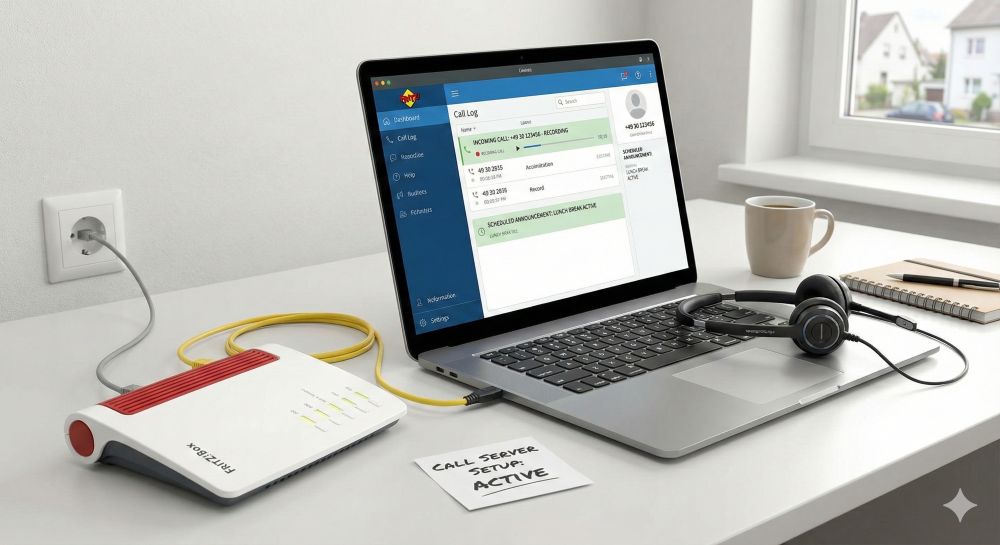
What is possible? 3 application examples
Step-by-step instructions
Step 3: Setting up Phoner on the laptop (Windows)
Step 4: Configure the Call Server (Answering Machine & Time Control)
Now comes the magic. In Phoner, there’s an Answering Machine tab (often found as an icon or in the menu).
A. Create Announcements: Record your announcements using the Windows Audio Recorder or directly in Phoner and save them as .wav files (e.g., midday.wav, end-of-work.wav, recording.wav).
B. Create Profiles: In Phoner’s options, you can create different profiles for the answering machine.
- Create a „Lunch Break“ profile.
- Load the file (e.g., midday.wav) as the greeting text.
- Set: „Answer after x seconds“ (e.g., 0 seconds for immediate answering).
- Check the „Record“ box if the caller is allowed to speak.
C. Time Control (Phoner): Phoner allows you to set conditions. In the menu under Options > Answering Machine, you can specify when each profile is active. This requires some familiarization with Phoner’s scripting logic, but to begin with, it’s often sufficient to manually activate the answering machine with a single click when you go on break.
Step 5: Recording Calls
If you are on a call yourself (using a headset on your laptop) and want to record it:
- Call the customer (or answer the call).
- Ask for permission.
In the active Phoner call window, click the record button (red circle). The file will be automatically saved in the Phoner folder with a timestamp.
Conclusion

Beliebte Beiträge

Word-Formatierungen endlich im Griff – Tutorial
Verzweifeln Sie nicht an zerschossenen Word-Dokumenten! Dieser Leitfaden zeigt Ihnen, wie Sie hartnäckige Formatierungen löschen, Formatvorlagen richtig nutzen und Steuerzeichen lesen. So sparen Sie Zeit und Nerven bei der Textverarbeitung.

Passwort für Word- und Excel-Dateien vergessen: So retten Sie Ihre Daten
Ein vergessenes Passwort bei Word oder Excel ist ärgerlich, bedeutet aber nicht immer Datenverlust. Während sich Schreibschutz durch einen XML-Trick umgehen lässt, erfordern verschlüsselte Dateien spezielle Tools. Hier finden Sie alle Lösungen im Überblick.

Excel KI-Update: So nutzen Sie Python & Copilot
Vergessen Sie komplexe Formeln! Excel wird durch Python und den KI-Copilot zum intelligenten Analysten. Diese Anleitung zeigt konkrete Beispiele, wie Sie Heatmaps erstellen, Szenarien simulieren und Ihre Arbeit massiv beschleunigen. Machen Sie Ihre Tabellen fit für die Zukunft.

Der XVERWEIS: Der neue Standard für die Datensuche in Excel
Verabschieden Sie sich vom Spaltenzählen! Der XVERWEIS macht die Datensuche in Excel endlich intuitiv und sicher. Erfahren Sie in diesem Tutorial, wie die Funktion aufgebaut ist, wie Sie sie anwenden und warum sie dem SVERWEIS und WVERWEIS haushoch überlegen ist.
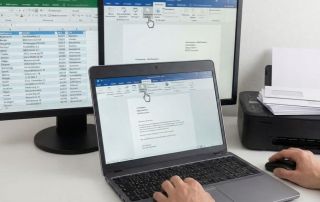
Nie wieder Adressen abtippen: So erstellen Sie Serienbriefe in Word
Müssen Sie hunderte Briefe versenden? Schluss mit manuellem Abtippen! Erfahren Sie, wie Sie in wenigen Minuten einen perfekten Serienbrief in Word erstellen. Von der sauberen Excel-Datenbank bis zum fertigen Druck – unser Guide führt Sie sicher durch den Prozess.

Warum dein Excel-Kurs Zeitverschwendung ist – was du wirklich lernen solltest!
Hand aufs Herz: Wann hast du zuletzt eine komplexe Excel-Formel ohne Googeln getippt? Eben. KI schreibt heute den Code für dich. Erfahre, warum klassische Excel-Trainings veraltet sind und welche 3 modernen Skills deinen Marktwert im Büro jetzt massiv steigern.
Angebote 2025/2026 in: Vorlagen